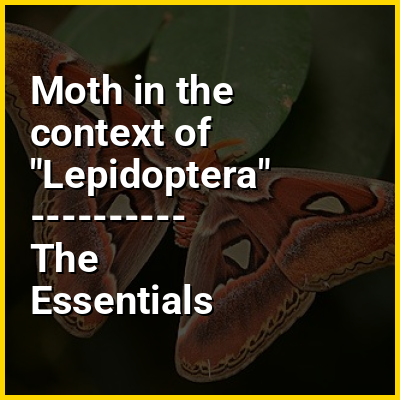
Moth in the context of "Lepidoptera"

Play Trivia Questions online!

or

Skip to study material about Moth in the context of "Lepidoptera"

Ad spacer

>>>PUT SHARE BUTTONS HERE<<<
In this Dossier

Moth in the context of Nectar

Nectar is a viscous, sugar-rich liquid produced by plants in glands called nectaries, either within the flowers with which it attracts pollinating animals, or by extrafloral nectaries, which provide a nutrient source to animal mutualists, which in turn provide herbivore protection. Common nectar-consuming pollinators include mosquitoes, hoverflies, wasps, bees, butterflies and moths, hummingbirds, honeyeaters and bats. Nectar is an economically important substance as it is the sugar source for honey.

Nectar is also useful in agriculture and horticulture because the adult stages of some predatory insects feed on nectar. For example, a number of predacious or parasitoid wasps (e.g., the social wasp species Apoica flavissima) rely on nectar as a primary food source. In turn, these wasps then hunt agricultural pest insects as food for their young.

↑ Return to Menu

Moth in the context of Caddisfly

The caddisflies (order Trichoptera) are a group of insects with aquatic larvae and terrestrial adults. There are approximately 14,500 described species, most of which can be divided into the suborders Integripalpia and Annulipalpia on the basis of the adult mouthparts. Integripalpian larvae construct a portable casing to protect themselves as they move around looking for food, while annulipalpian larvae make themselves a fixed retreat in which they remain, waiting for food to come to them. The affinities of the small third suborder Spicipalpia are unclear, and molecular analysis suggests it may not be monophyletic. Also called sedge-flies or rail-flies, the adults are small moth-like insects with two pairs of hairy membranous wings. They are closely related to the Lepidoptera (moths and butterflies) which have scales on their wings; the two orders together form the superorder Amphiesmenoptera.

The aquatic larvae are found in a wide variety of habitats such as streams, rivers, lakes, ponds, spring seeps and temporary waters (vernal pools), and even the ocean. The larvae of many species use silk to make protective cases, which are often strengthened with gravel, sand, twigs, bitten-off pieces of plants, or other debris. The larvae exhibit various feeding strategies, with different species being predators, leaf shredders, algal grazers, or collectors of particles from the water column and benthos. Most adults have short lives during which they do not feed.

↑ Return to Menu

Moth in the context of Silkworm

Bombyx mori, commonly known as the domestic silk moth, is a moth species belonging to the family Bombycidae. It is the closest relative of Bombyx mandarina, the wild silk moth. Silkworms are the larvae of silk moths. The silkworm is of particular economic value, being a primary producer of silk. The silkworm's preferred food are the leaves of white mulberry, though they may eat other species of mulberry, and even leaves of other plants. Domestic silk moths are entirely dependent on humans for reproduction, as a result of millennia of selective breeding. Wild silk moths, which are other species of Bombyx, are not as commercially viable in the production of silk.

Sericulture, the practice of breeding silkworms for the production of raw silk, has existed for at least 5,000 years in China, whence it spread to India, Korea, Nepal, Japan, and then the West. The conventional process of sericulture kills the silkworm in the pupal stage. The domestic silk moth was domesticated from the wild silk moth Bombyx mandarina, which has a range from northern India to northern China, Korea, Japan, and the far eastern regions of Russia. The domestic silk moth derives from Chinese rather than Japanese or Korean stock.

↑ Return to Menu

Moth in the context of Threat display

Deimatic behaviour or startle display means any pattern of bluffing behaviour in an animal that lacks strong defences, such as suddenly displaying conspicuous eyespots to scare off or momentarily distract a predator, thus giving the prey animal an opportunity to escape. The term deimatic or dymantic originates from the Greek δειματόω (deimatóo), meaning "to frighten".

Deimatic display occurs in widely separated groups of animals, including moths, butterflies, mantises and phasmids among the insects. In the cephalopods, different species of octopuses, squids, cuttlefish and the paper nautilus are deimatic.

↑ Return to Menu

Moth in the context of Hyalophora cecropia

Hyalophora cecropia, the cecropia moth, is North America's largest native moth. It is a member of the family Saturniidae, or giant silk moths. Females have been documented with a wingspan of five to seven inches (13 to 18 cm) or more. These moths can be found predominantly across the east of North America, with occurrences as far west as Washington and north into the majority of Canadian provinces. Cecropia moth larvae are most commonly found on maple trees, but they have also been found on cherry and birch trees among many others. The species was first described by Carl Linnaeus in his 1758 10th edition of Systema Naturae.

↑ Return to Menu

Moth in the context of Antheraea pernyi

Antheraea pernyi, the Chinese oak tussar moth, Chinese tasar moth, or temperate tussar moth, is a large moth in the family Saturniidae. The species was first described by Félix Édouard Guérin-Méneville in 1855. Antheraea roylei is an extremely close relative, and the present species might actually have evolved from ancestral A. roylei by chromosome rearrangement.

They are originally from southern China. Used for tussar silk production, they have been distributed more widely across subtropical and tropical Asia. Unlike the domestic silk moth which is entirely dependent on human care, tussah silk moths can survive in the wild if they escape from captivity; small local populations of such feral stock may thus occasionally occur. The colour and quality of the silk depends on the climate and soil.

↑ Return to Menu

Moth in the context of ZW sex-determination system

The ZW sex-determination system is a chromosomal system that determines the sex of offspring in birds, some fish and crustaceans such as the giant river prawn, some insects (including butterflies and moths), the schistosome family of flatworms, and some reptiles, e.g. majority of snakes, lacertid lizards and monitors, including Komodo dragons. It is also present in some plants, where it has evolved independently on many occasions, characterizing at least 22% of plants with documented sex chromosomes. The letters Z and W are used to distinguish this system from the XY sex-determination system. In the ZW system, females have a pair of dissimilar ZW chromosomes, and males have two similar ZZ chromosomes.

In contrast to the XY sex-determination system and the X0 sex-determination system, where the sperm determines the sex, in the ZW system, the ovum determines the sex of the offspring. Males are the homogametic sex (ZZ), while females are the heterogametic sex (ZW). The Z chromosome is larger and has more genes, similarly to the X chromosome in the XY system.

↑ Return to Menu

Moth in the context of Cycad

Cycads /ˈskædz/—constituting the division Cycadophyta—are seed plants with a stout, woody cylindrical trunk with a crown of large, hard, stiff, evergreen and usually pinnate (feather-shaped) leaves. The species are dioecious, that is, individual plants of a species are either male or female. Cycads vary in size from having trunks only a few centimeters to several meters tall. They typically grow slowly and have long lifespans. They superficially resemble palms or ferns, but are not closely related to either group. Cycads are gymnosperms. Cycads have specialized pollinators, usually a specific beetle, and more rarely a thrips or a moth.

Both male and female cycads bear cones (strobili) containing their seeds, somewhat resembling conifer cones. Cycads fix nitrogen in association with cyanobacteria living in the plants' roots. Some species are used as narcotics, while in Vanuatu the plant symbolizes peace and appears on the national flag. Cycads all over the world are in decline, with four species on the brink of extinction and seven species each with fewer than 100 plants left in the wild.

↑ Return to Menu