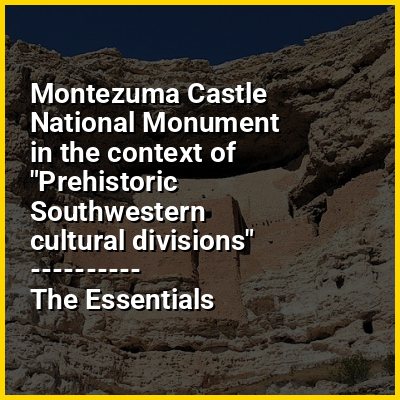
Montezuma Castle National Monument protects a well-preserved cliff dwelling located in Camp Verde, Arizona. The National Monument also protects and preserves the Castle A site, a contemporaneous dwelling site located near the cliff dwelling. The construction of the Montezuma Castle and Castle A sites are both attributed to the Southern Sinagua people, a pre-Columbian archaeological culture that may be closely related to several ancestral indigenous peoples of the southwestern United States. Archaeological evidence suggests that the dwelling was constructed as early as 1125 AD and occupied until as late as 1395 AD.
Many Native American communities trace their ancestry to groups of people that lived in or nearby the cliff dwelling. Archaeologists have defined these ancestral groups variously as Southern Sinagua, Hohokam and Hakataya. Archaeological labels do not constitute tribes as we understand them today and contemporary tribal communities may define their ancestry differently than archaeologists. These communities may oppose popular archaeological labels in favor of native-language terms or culturally specific social units.