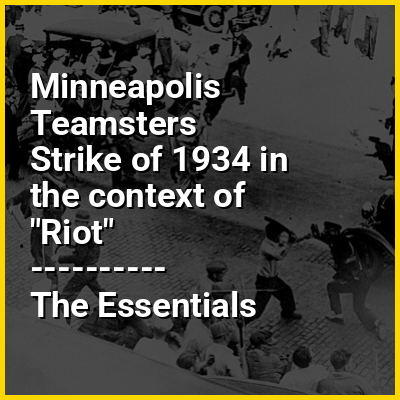
The Minneapolis general strike of 1934 grew out of a strike by Teamsters against most of the trucking companies operating in Minneapolis, the major distribution center for the Upper Midwest. The strike began on May 16, 1934 in the Market District (the modern day Warehouse District). The worst single day was Friday, July 20, called "Bloody Friday", when police shot at strikers in a downtown truck battle, killing two and injuring 67. Ensuing violence lasted periodically throughout the summer. The strike was formally ended on August 22.
With a coalition formed by local leaders associated with the Trotskyist Communist League of America, a group that later founded the Socialist Workers Party (United States), the strike paved the way for the organization of over-the-road drivers and the growth of the Teamsters labor union. This strike, along with the 1934 West Coast Longshore Strike and the 1934 Toledo Auto-Lite Strike led by the American Workers Party, were also important catalysts for the rise of industrial unionism in the 1930s, much of which was organized through the Congress of Industrial Organizations.