Minimum wage in the United States in the context of Fair Labor Standards Act


Minimum wage in the United States in the context of Fair Labor Standards Act

⭐ Core Definition: Minimum wage in the United States

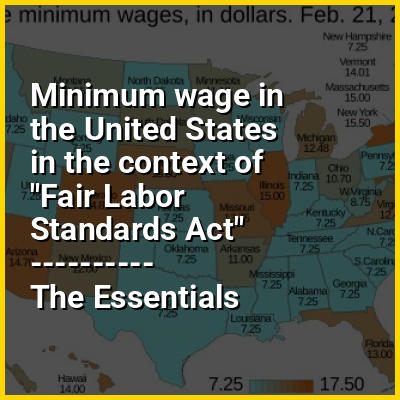
In the United States, the minimum wage is set by U.S. labor law and a range of state and local laws. The first federal minimum wage was instituted in the National Industrial Recovery Act of 1933, signed into law by President Franklin D. Roosevelt, but later found to be unconstitutional. In 1938, the Fair Labor Standards Act established it at 25¢ an hour ($5.58 in 2024). Its purchasing power peaked in 1968, at $1.60 ($14.47 in 2024). In 2009, Congress increased it to $7.25 per hour with the Fair Minimum Wage Act of 2007.

Employers have to pay workers the highest minimum wage of those prescribed by federal, state, and local laws. In August 2022, 30 states and the District of Columbia had minimum wages higher than the federal minimum. As of July 2025, 22 states and the District of Columbia have minimum wages above the federal level. In 2019, only 1.6 million Americans earned no more than the federal minimum wage—about ~1% of workers, and less than ~2% of those paid by the hour. Less than half worked full time; almost half were aged 16–25; and more than 60% worked in the leisure and hospitality industries, where many workers received tips in addition to their hourly wages. No significant differences existed among ethnic or racial groups; women were about twice as likely as men to earn minimum wage or less.
↓ Menu
HINT:

In this Dossier

Minimum wage in the United States in the context of Progressivism in the United States

Progressivism in the United States is a left-leaning political philosophy and reform movement. Into the 21st century, it advocates policies that are generally considered social democratic and part of the American Left. It has also expressed itself within center-right politics, such as New Nationalism and progressive conservatism. It reached its height early in the 20th century. Middle/working class and reformist in nature, it arose as a response to the vast changes brought by modernization, such as the growth of large corporations, pollution, and corruption in American politics. Historian Alonzo Hamby describes American progressivism as a "political movement that addresses ideas, impulses, and issues stemming from modernization of American society. Emerging at the end of the nineteenth century, it established much of the tone of American politics throughout the first half of the century."

Progressive economic policies incorporate the socioeconomic principles and views of social democracy and political progressivism. These views are often rooted in the concept of social justice and have the goal of improving the human condition through government regulation, social protections, and the maintenance of public goods. It is based on the idea that capitalist markets left to operate with limited government regulation are inherently unfair, favoring big business, large corporations, and the wealthy. Specific economic policies that are considered progressive include progressive taxes, income redistribution aimed at reducing inequalities of wealth, a comprehensive package of public services, universal health care, resisting involuntary unemployment, public education, social security, minimum wage laws, antitrust laws, legislation protecting labor rights, and the rights of labor unions. While the modern progressive movement may be characterized as largely secular in nature, the historical progressive movement was by comparison to a significant extent rooted in and energized by religion.

View the full Wikipedia page for Progressivism in the United States
↑ Return to Menu