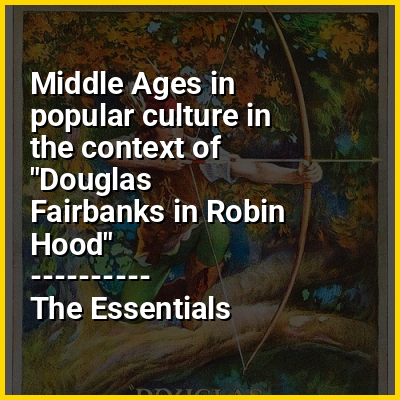
Representations of the Middle Ages frequently appear across a wide range of cultural media, including literature, drama, film, television, comics, reenactment, music, tabletop and video games, digital media, and commercial entertainment. These depictions often draw selectively from historical events, myths, and cultural symbols to construct narratives that reflect modern interests, anxieties, and values. Popular culture has played a major role in shaping public perceptions of the medieval period, contributing both to romanticized images of chivalry, knighthood, and heroic quests, and to darker interpretations emphasizing violence, superstition, and social rigidity.
Because the medieval past is distant yet visually and narratively adaptable, creators frequently reinterpret it through contemporary genres such as fantasy, action, comedy, and historical drama. This has led to a diverse array of medievalist works ranging from highly stylized retellings of legendary figures like King Arthur and Robin Hood to entirely fictional worlds inspired by medieval aesthetics. Modern scholarship identifies these reinterpretations as part of the broader field of medievalism, which studies how post-medieval societies imagine and repurpose the Middle Ages for artistic, political, and commercial purposes.