Merkinė in the context of Dzūkija National Park


Merkinė in the context of Dzūkija National Park

⭐ Core Definition: Merkinė

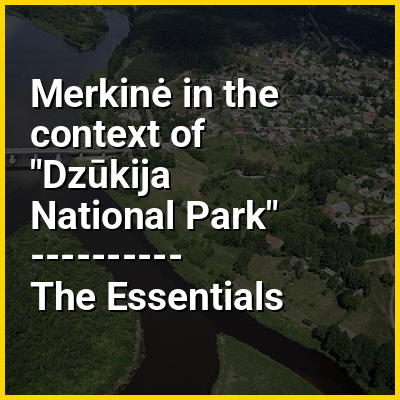
Merkinė (also known by several other names) is a small town in Alytus County, which is located at the confluence of the Neman and Merkys rivers. The town belongs to the Varėna District Municipality and is located about 26 kilometers west of Varėna and 28 kilometers south of Alytus. As of 2021, the town had 963 residents.

Merkinė is one of the oldest settlements in Lithuania. The Merkinė Castle was first mentioned in written sources in 1359. The first settlers inhabited the confluence of Merkys and Nemunas in the 9th-10th century BC, at the end of the Paleolithic. On top of Merkinė hill-fort stood one of the most important Lithuanian castles, built in the 13th century, which guarded against invasions of the Teutonic Order. Merkinė was a part of a strategic triangle - Kaunas - Vilnius - Merkinė, protected with the chains of hillforts and castles. The center of Merkinė town is a state-protected urbanistic monument. Merkinė is an important point of Lithuania's domestic tourism. The town lies entirely in the Dzūkija National Park territory.
↓ Menu
HINT:

In this Dossier

Merkinė in the context of List of cities in Lithuania

In Lithuania, there are 103 cities (miestai). The term city is defined by the Parliament of Lithuania as a compact urban area with more than 3,000 people, of whom at least two-thirds work in the industry or service sector. Settlements with a population of less than 3,000 but with historical city status are still considered to be cities. Smaller settlements are known as towns (miesteliai), and even smaller settlements are known as villages (kaimai). Often the official status of these smaller settlements are unclear, and people simply refer to both towns and villages as settlements (gyvenvietės).

The cities started to form between the 13th and 14th centuries together with the Grand Duchy of Lithuania. The first to receive city rights was Klaipėda. According to medieval law, a city could have its own fairs, taverns, guilds, courts, etc. Some former cities lost their status and are now just towns or villages, for example Kernavė and Merkinė. Most of the cities in Lithuania were established before the 18th century. Their location is mostly determined by trade and transportation routes. Some of the newer cities grew because of railroad construction, for example Kaišiadorys, Vievis, Radviliškis, Ignalina and Mažeikiai. In the 20th century, new cities grew primarily to service state developed industrial complexes, for example Visaginas, Elektrėnai and Naujoji Akmenė.

View the full Wikipedia page for List of cities in Lithuania
↑ Return to Menu