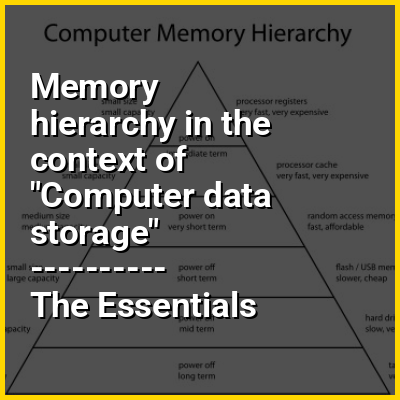
In computer architecture, the memory hierarchy separates computer storage into a hierarchy based on response time. Since response time, complexity, and capacity are related, the levels may also be distinguished by their performance and controlling technologies. Memory hierarchy affects performance in computer architectural design, algorithm predictions, and lower level programming constructs involving locality of reference.
Designing for high performance requires considering the restrictions of the memory hierarchy, i.e. the size and capabilities of each component. Each of the various components can be viewed as part of a hierarchy of memories (m1, m2, ..., mn) in which each member mi is typically smaller and faster than the next highest member mi+1 of the hierarchy. To limit waiting by higher levels, a lower level will respond by filling a buffer and then signaling for activating the transfer.