Megaherbivore in the context of "Keystone species"

Play Trivia Questions online!

or

Skip to study material about Megaherbivore in the context of "Keystone species"

Ad spacer

⭐ Core Definition: Megaherbivore

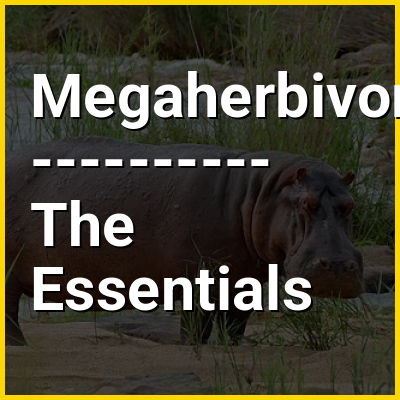
Megaherbivores (Greek μέγας megas "large" and Latin herbivora "herbivore") are large herbivores that can exceed 1,000 kg (2,200 lb) in weight. The earliest herbivores to reach such sizes like the pareiasaurs appeared in the Permian period. During most of the Mesozoic, the megaherbivore niche was largely dominated by dinosaurs up until their extinction during the Cretaceous–Paleogene extinction event. After this period, small mammalian species evolved into large herbivores in the Paleogene. As part of the Late Pleistocene megafauna extinctions, 80% of megaherbivore species became extinct, with megaherbivores becoming entirely extinct in Europe, Australia and the Americas. Recent megaherbivores include elephants, rhinos, hippos, and giraffes. There are nine extant species of terrestrial megaherbivores living in Africa and Asia. The African bush elephant is the largest extant species.

Extant megaherbivores are keystone species in their environment. They defoliate the landscape and spread a greater number of seeds than other frugivores. Extant megaherbivores, like most large mammals, are K-selected species and are characterized by their large size, relative immunity to predation, their effect on plant species, and their dietary tolerance.
↓ Menu

>>>PUT SHARE BUTTONS HERE<<<
In this Dossier

Megaherbivore in the context of Holocene extinction

The Holocene or Anthropocene extinction is an ongoing extinction event caused by human activity during the current geological epoch, impacting diverse families of plants and animals, including mammals, birds, reptiles, amphibians, fish, and invertebrates, as well as both terrestrial and marine species. It is sometimes also called the sixth mass extinction (or seventh if counting the Capitanian and End Permian extinctions separately).

Current extinction rates are estimated at 100 to 1,000 times higher than natural background extinction rates and are accelerating. The Holocene extinction was preceded by the Late Pleistocene megafauna extinctions (lasting from 50,000 to 10,000 years ago), in which many large mammals – including 81% of megaherbivores – went extinct, a decline attributed at least in part to human (anthropogenic) activities. There continue to be strong debates about the relative importance of anthropogenic factors and climate change, but a recent review concluded that there is little evidence for a major role of climate change and "strong" evidence for human activities as the principal driver. Examples from regions such as New Zealand, Madagascar, and Hawaii have shown how human colonization and habitat destruction have led to significant biodiversity losses.

↑ Return to Menu

Megaherbivore in the context of Indian elephant

The Indian elephant (Elephas maximus indicus) is one of three extant recognized subspecies of the Asian elephant, native to mainland Asia. The species is smaller than the African elephant species with a convex back and the highest body point on its head. The species exhibits significant sexual dimorphism with a male reaching an average shoulder height of about 2.75 m (9 ft 0 in) and weighing 4,000 kg (8,800 lb) whereas a female reaches an average shoulder height of about 2.4 m (7 ft 10 in) and weighs 2,700 kg (6,000 lb). It has a broader skull with a concave forehead, two large laterally folded ears and a large trunk. It has smooth grey skin with four large legs and a long tail.

The Indian elephant is native to mainland Asia with nearly three-fourth of the population found in India. The species is also found in other countries of the Indian subcontinent including Nepal, Bangladesh, Bhutan, Myanmar and South East Asian countries including Thailand, Malaysia, Laos, Cambodia, and Vietnam with small populations in China. It inhabits grasslands, dry deciduous, moist deciduous, evergreen and semi-evergreen forests across the range. The species is classified as a megaherbivore and consume up to 150 kg (330 lb) of plant matter per day. They consume a variety of diet depending on the habitat and seasons and might include leaves and twigs of fresh foliage, thorn-bearing shoots, flowering plants, fruits and grass.

↑ Return to Menu