Male reproductive system in the context of "Men"

Play Trivia Questions online!

or

Skip to study material about Male reproductive system in the context of "Men"

Ad spacer

⭐ Core Definition: Male reproductive system

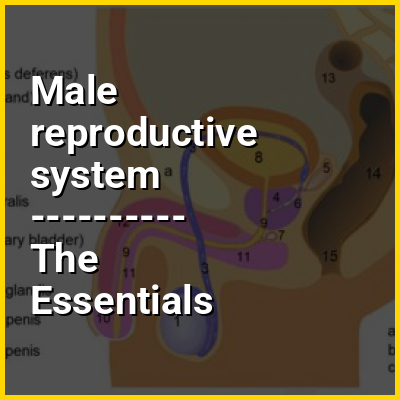
The male reproductive system consists of a number of sex organs that play a role in the process of human reproduction. These organs are located on the outside of the body, and within the pelvis.

The main male sex organs are the penis and the scrotum, which contains the testicles that produce semen and sperm, which, as part of sexual intercourse, fertilize an ovum in the female's body; the fertilized ovum (zygote) develops into a fetus, which is later born as an infant. The corresponding system in females is the female reproductive system.

↓ Menu

>>>PUT SHARE BUTTONS HERE<<<
In this Dossier

Male reproductive system in the context of Urology

Urology (from Greek οὖρον ouron "urine" and -λογία -logia "study of"), also known as genitourinary surgery, is the branch of medicine that focuses on surgical and medical diseases of the urinary system and the male reproductive organs. Organs under the domain of urology include the kidneys, adrenal glands, ureters, urinary bladder, urethra, and the male reproductive organs (testes, epididymides, vasa deferentia, seminal vesicles, prostate, and penis).

The urinary and reproductive tracts are closely linked, and disorders of one often affect the other. Thus a major spectrum of the conditions managed in urology exists under the domain of genitourinary disorders. Urology combines the management of medical (i.e., non-surgical) conditions, such as urinary-tract infections and benign prostatic hyperplasia, with the management of surgical conditions such as bladder or prostate cancer, kidney stones, congenital abnormalities, traumatic injury, and stress incontinence.

↑ Return to Menu

Male reproductive system in the context of Man

A man is an adult male human. Before adulthood, a male child or adolescent is referred to as a boy.

Like most other male mammals, a man's genome usually inherits an X chromosome from the mother and a Y chromosome from the father. Sex differentiation of the male fetus is governed by the SRY gene on the Y chromosome. During puberty, hormones which stimulate androgen production result in the development of secondary sexual characteristics that result in even more differences between the sexes. These include greater muscle mass, greater height, the growth of facial hair and a lower body fat composition. Male anatomy is distinguished from female anatomy by the male reproductive system, which includes the testicles, sperm ducts, prostate gland and epididymides, and penis. Secondary sex characteristics include a narrower pelvis and hips, and smaller breasts and nipples.

↑ Return to Menu

Male reproductive system in the context of Prostate

The prostate is an accessory gland of the male reproductive system and a muscle-driven mechanical switch between urination and ejaculation. It is found in all male mammals. It differs between species anatomically, chemically, and physiologically. Anatomically, the prostate is found below the bladder, with the urethra passing through it. It is described in gross anatomy as consisting of lobes and in microanatomy by zone. It is surrounded by an elastic, fibromuscular capsule and contains glandular and connective tissue.

The prostate produces and contains fluid that forms part of semen, the substance emitted during ejaculation as part of the male sexual response. This prostatic fluid is slightly alkaline, and milky or white in appearance. The alkalinity of semen helps neutralize the acidity of the vaginal tract, prolonging the lifespan of sperm. The prostatic fluid is expelled in the first part of ejaculate, together with most of the sperm, because of the action of smooth muscle tissue within the prostate. In comparison with the few spermatozoa expelled together with mainly seminal vesicular fluid, those in prostatic fluid have better motility, longer survival, and better protection of genetic material.

↑ Return to Menu

Male reproductive system in the context of Human penis

In human anatomy, the penis (/ˈpnɪs/; pl.: penises or penes; from the Latin pēnis, initially 'tail') is an external sex organ (intromittent organ) through which males ejaculate and urinate. Together with the testes and surrounding structures, the penis functions as part of the male reproductive system.

The main parts of the penis are the root, body, the epithelium, including the shaft skin, and the foreskin covering the glans. The body of the penis is made up of three columns of tissue: two corpora cavernosa on the dorsal side and corpus spongiosum between them on the ventral side. The urethra passes through the prostate gland, where it is joined by the ejaculatory ducts, and then through the penis. The urethra goes across the corpus spongiosum and ends at the tip of the glans as the opening, called the urinary meatus.

↑ Return to Menu

Male reproductive system in the context of Prostate cancer

Prostate cancer is the uncontrolled growth of cells in the prostate, a gland in the male reproductive system below the bladder. Abnormal growth of the prostate tissue is usually detected through screening tests, typically blood tests that check for prostate-specific antigen (PSA) levels. Those with high levels of PSA in their blood are at increased risk for developing prostate cancer. Diagnosis requires a biopsy of the prostate. If cancer is present, the pathologist assigns a Gleason score; a higher score represents a more dangerous tumor. Medical imaging is performed to look for cancer that has spread outside the prostate. Based on the Gleason score, PSA levels, and imaging results, a cancer case is assigned a stage 1 to 4. A higher stage signifies a more advanced, more dangerous disease.

Most prostate tumors remain small and cause no health problems. These are managed with active surveillance, monitoring the tumor with regular tests to ensure it has not grown. Tumors more likely to be dangerous can be destroyed with radiation therapy or surgically removed by radical prostatectomy. Those whose cancer spreads beyond the prostate are treated with hormone therapy which reduces levels of the androgens (masculinizing sex hormones) which prostate cells need to survive. Eventually cancer cells can grow resistant to this treatment. This most-advanced stage of the disease, called castration-resistant prostate cancer, is treated with continued hormone therapy alongside the chemotherapy drug docetaxel. Some tumors metastasize (spread) to other areas of the body, particularly the bones and lymph nodes. There, tumors cause severe bone pain, leg weakness or paralysis, and eventually death. Prostate cancer prognosis depends on how far the cancer has spread at diagnosis. Most men diagnosed have low-risk tumors confined to the prostate; 99% of them survive more than 10 years from their diagnoses. Tumors that have metastasized to distant body sites are most dangerous, with five-year survival rates of 30–40%.
↑ Return to Menu

Male reproductive system in the context of Testosterone

Testosterone is the primary male sex hormone and androgen in males. In humans, testosterone plays a key role in the development of male reproductive tissues such as testicles and prostate, as well as promoting secondary sexual characteristics such as increased muscle and bone mass, and the growth of body hair. It is associated with increased aggression, sex drive, dominance, courtship display, and a wide range of behavioral characteristics. In addition, testosterone in both sexes is involved in health and well-being, where it has a significant effect on overall mood, cognition, social and sexual behavior, metabolism and energy output, the cardiovascular system, and in the prevention of osteoporosis. Insufficient levels of testosterone in men may lead to abnormalities including frailty, accumulation of adipose fat tissue within the body, anxiety and depression, sexual performance issues, and bone loss.

Excessive levels of testosterone in men may be associated with hyperandrogenism, higher risk of heart failure, increased mortality in men with prostate cancer, and male pattern baldness.

↑ Return to Menu

Male reproductive system in the context of Men's health

Men's health is a state of complete physical, mental, and social well-being as experienced by men, and not merely the absence of disease. Differences in men's health compared to women's can be attributed to biological factors, behavioral factors, and social factors (e.g., occupations).

Men's health often relates to biological factors such as the male reproductive system or conditions caused by hormones specific to, or most notable in, males. Some conditions that affect both men and women, such as cancer, and injury, manifest differently in men. Some diseases that affect both sexes are statistically more common in men. In terms of behavioral factors, men are more likely to make unhealthy or risky choices and less likely to seek medical care.

↑ Return to Menu