Lordship of Glamorgan in the context of "Laws in Wales Acts 1535–1542"

Play Trivia Questions online!

or

Skip to study material about Lordship of Glamorgan in the context of "Laws in Wales Acts 1535–1542"


⭐ Core Definition: Lordship of Glamorgan

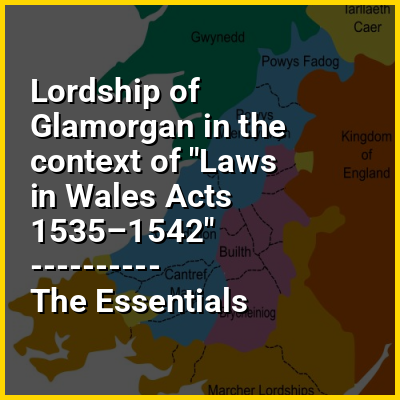
The Lordship of Glamorgan was one of the most powerful and wealthy of the Welsh Marcher Lordships. The seat was Cardiff Castle. It was established by the conquest of Glamorgan from its native Welsh ruler, by the Anglo-Norman nobleman Robert FitzHamon, feudal baron of Gloucester, and his legendary followers the Twelve Knights of Glamorgan. The Anglo-Norman Lord of Glamorgan, like all Marcher lords, ruled his lands directly by his own law: thus he could, amongst other things, declare war, raise taxes, establish courts and markets and build castles as he wished, without reference to the Crown. These privileges were only lost under the Laws in Wales Acts 1535–1542. Though possessing many castles, the main seat of the Lordship was Cardiff Castle.

↓ Menu

In this Dossier

Lordship of Glamorgan in the context of Glamorgan

Glamorgan (/ɡləˈmɔːrɡən/), or sometimes Glamorganshire (Welsh: Morgannwg [mɔrˈɡanʊɡ] or Sir Forgannwg [ˈsiːr vɔrˈɡanʊɡ]), was one of the thirteen counties of Wales that existed from 1536 until their abolition in 1974. It is located in South Wales. Originally an early medieval petty kingdom of varying boundaries known in Welsh as Morgannwg (or Glywysing), which was then invaded and taken over by the Normans as the Lordship of Glamorgan. The area that became known as Glamorgan was both a rural, pastoral area, and a conflict point between the Norman lords and the Welsh princes. It was defined by a large concentration of castles.

After falling under English rule in the 16th century, Glamorgan became a more stable county, and exploited its natural resources to become an important part of the Industrial Revolution. Glamorgan was the most populous and industrialised county in Wales, and was once called the "crucible of the Industrial Revolution", as it contained the world centres of three metallurgical industries (iron, steel and copper) and its rich resources of coal.

↑ Return to Menu