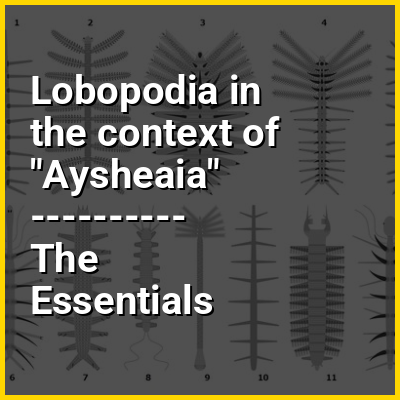
Lobopodians are members of the informal group Lobopodia (from Ancient Greek λοβός [lobós] 'lobe' and πόδα [podá] 'foot'), or the formally erected phylum Lobopoda Cavalier-Smith (1998). They are panarthropods with stubby legs called lobopods, a term which may also be used as a common name of this group as well. While the definition of lobopodians may differ between literatures, it usually refers to a group of soft-bodied, marine (and freshwater) worm-like fossil panarthropods such as Aysheaia and Hallucigenia. However, other genera like Kerygmachela and Pambdelurion (which have features similar to other groups) are often referred to as "gilled lobopodians".
The oldest near-complete fossil lobopodians date to the Lower Cambrian; some are also known from Ordovician, Silurian and Carboniferous Lagerstätten. Some bear toughened claws, plates or spines, which are commonly preserved as carbonaceous or mineralized microfossils in Cambrian strata. The grouping is considered to be paraphyletic, as the three living panarthropod groups (Arthropoda, Tardigrada and Onychophora) are thought to have evolved from lobopodian ancestors.