Little Tich in the context of "Arthur Orton"

Play Trivia Questions online!

or

Skip to study material about Little Tich in the context of "Arthur Orton"


⭐ Core Definition: Little Tich

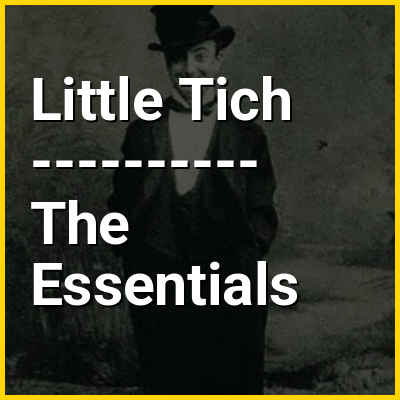
Harry Relph (21 July 1867 – 10 February 1928), professionally known as Little Tich, was a 4-foot-6-inch-tall (137 cm) English music hall comedian and dancer during the late 19th and early 20th centuries. He was best known for his acrobatic and comedic "Big-Boot Dance", which he performed in Europe and for which he wore boots with soles 28 inches (71 cm) long. Aside from his music hall appearances, he was also a popular performer in Christmas pantomimes and appeared in them annually at theatres throughout the English provinces. He repeated this success in London, where he appeared in three pantomimes at the Theatre Royal, Drury Lane, between 1891 and 1893 alongside Dan Leno and Marie Lloyd.

Born in Cudham, Kent, Little Tich began performing aged ten when he developed a dance and tin-whistle act which he showcased at public houses in Sevenoaks. In the early 1880s he formed a blackface act and gained popularity with performances at the nearby Rosherville Pleasure Gardens and Barnard's Music Hall in Chatham. He travelled to London and appeared at the Forester's Music Hall in 1884. Later that year, he adopted the stage name "Little Tich", which he based on his childhood nickname of "Tichborne", acquired through his portly stature and physical likeness to the suspected Tichborne Claimant Arthur Orton. The terms "titchy" or "titch" were later derived from "Little Tich" and are used to describe things that are small.
↓ Menu

In this Dossier

Little Tich in the context of Music hall

Music hall is a type of British theatrical entertainment that was most popular from the early Victorian era until around World War I. It faded away after 1918 as the halls rebranded their entertainment as variety. Perceptions of a distinction in Britain between bold and scandalous music hall entertainment and subsequent, more respectable variety entertainment differ. Music hall involved a mixture of popular songs, comedy, speciality acts, and variety entertainment. The term is derived from a type of theatre or venue in which such entertainment took place. In North America vaudeville was in some ways analogous to British music hall, featuring rousing songs and comic acts.

Originating in saloon bars within pubs during the 1830s, music hall entertainment became increasingly popular with audiences. So much so, that during the 1850s some public houses were demolished, and specialised music hall theatres developed in their place. These theatres were designed chiefly so that people could consume food and alcohol and smoke tobacco in the auditorium while the entertainment took place, with the cheapest seats located in the gallery. This differed from the conventional type of theatre, which seats the audience in stalls with a separate bar-room. Major music halls were based around London. Early examples included: the Canterbury Music Hall in Lambeth, Wilton's Music Hall in Tower Hamlets, and The Middlesex in Drury Lane, otherwise known as the Old Mo. By the mid-19th century, the halls cried out for many new and catchy songs. As a result professional songwriters were enlisted to provide the music for a plethora of star performers, such as Marie Lloyd, Dan Leno, Little Tich, and George Leybourne. All manner of other entertainment was performed: male and female impersonators, lions comiques, mime artists and impressionists, trampoline acts, and comic pianists (such as John Orlando Parry and George Grossmith) were just a few of the many types of entertainments the audiences could expect to find over the next forty years.

↑ Return to Menu

Little Tich in the context of Augustus Harris

Sir Augustus Henry Glossop Harris (18 March 1852 – 22 June 1896) was a British actor, impresario, and dramatist, a dominant figure in the West End theatre of the 1880s and 1890s.

Born into a theatrical family, Harris briefly pursued a commercial career before becoming an actor and subsequently a stage-manager. At the age of 27 he became the lessee of the large Theatre Royal, Drury Lane, where he mounted popular melodramas and annual pantomimes on a grand and spectacular scale. The pantomimes featured leading music hall stars such as Dan Leno, Marie Lloyd, Little Tich and Vesta Tilley. The profits from these productions subsidised his opera seasons, equally lavish, starrily cast and with an innovative repertoire. He presented the first British production of Die Meistersinger and the first production anywhere outside Germany of Tristan und Isolde, and revitalised the staging of established classics.

↑ Return to Menu