Lingual lipase in the context of "Taste receptor"

Play Trivia Questions online!

or

Skip to study material about Lingual lipase in the context of "Taste receptor"

Ad spacer

⭐ Core Definition: Lingual lipase

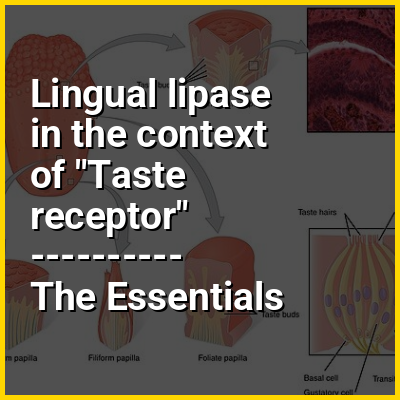
Lingual lipase is a member of a family of digestive enzymes called triacylglycerol lipases, EC 3.1.1.3, that use the catalytic triad of aspartate, histidine, and serine to hydrolyze medium and long-chain triglycerides into partial glycerides and free fatty acids. The enzyme, released into the mouth along with the saliva, catalyzes the first reaction in the digestion of dietary lipid, with diglycerides being the primary reaction product. However, due to the unique characteristics of lingual lipase, including a pH optimum 4.5–5.4 and its ability to catalyze reactions without bile salts, the lipolytic activity continues through to the stomach. Enzyme release is signaled by the autonomic nervous system after ingestion, at which time the serous glands under the circumvallate and foliate papillae on the surface of the tongue secrete lingual lipase into the grooves of the papillae, co-localized with fat taste receptors. The hydrolysis of the dietary fats is essential for fat absorption by the small intestine, as long chain triacylglycerides cannot be absorbed, and as much as 30% of fat is hydrolyzed within 1 to 20 minutes of ingestion by lingual lipase alone.

Lingual lipase, together with gastric lipase, comprise the two acidic lipases.
↓ Menu

>>>PUT SHARE BUTTONS HERE<<<
In this Dossier

Lingual lipase in the context of Human digestive system

The human digestive system consists of the gastrointestinal tract plus the accessory organs of digestion (the tongue, salivary glands, pancreas, liver, and gallbladder). Digestion involves the breakdown of food into smaller and smaller components, until they can be absorbed and assimilated into the body. The process of digestion has three stages: the cephalic phase, the gastric phase, and the intestinal phase.

The first stage, the cephalic phase of digestion, begins with secretions from gastric glands in response to the sight and smell of food, and continues in the mouth with the mechanical breakdown of food by chewing, and the chemical breakdown by digestive enzymes in the saliva. Saliva contains amylase, and lingual lipase, secreted by the salivary glands, and serous glands on the tongue. Chewing mixes the food with saliva to produce a bolus to be swallowed down the esophagus to enter the stomach. The second stage, the gastric phase, takes place in the stomach, where the food is further broken down by mixing with gastric juice until it passes into the duodenum, the first part of the small intestine. The intestinal phase where the partially digested food is mixed with pancreatic digestive enzymes completes the process of digestion.

↑ Return to Menu

Lingual lipase in the context of Saliva

Saliva (commonly referred as spit or drool) is an extracellular fluid produced and secreted by salivary glands in the mouth. In humans, saliva is around 99% water, plus electrolytes, mucus, white blood cells, epithelial cells (from which DNA can be extracted), enzymes (such as lingual lipase and amylase), and antimicrobial agents (such as secretory IgA, and lysozymes).

The enzymes found in saliva are essential in beginning the process of digestion of dietary starches and fats. These enzymes also play a role in breaking down food particles trapped within dental crevices, thus protecting teeth from bacterial decay. Saliva also performs a lubricating function, wetting food and permitting the initiation of swallowing, and protecting the oral mucosa from drying out.

↑ Return to Menu

Lingual lipase in the context of Chew

Chewing or mastication is the process by which food is crushed and ground by the teeth. It is the first step in the process of digestion, allowing a greater surface area for digestive enzymes and bile to break down the foods.

During the mastication process, the food is positioned by the cheek and tongue between the teeth for grinding. The muscles of mastication move the jaws to bring the teeth into intermittent contact, repeatedly occluding and opening. As chewing continues, the food is made softer and warmer, and the enzymes in saliva (especially amylase and lingual lipase) begin to break down carbohydrates and other nutrients in the food. After chewing, the food (now called a bolus) is swallowed. It enters the esophagus and via peristalsis continues on to the stomach, where the next step of digestion occurs. Increasing the number of chews per bite stimulates the production of digestive enzymes and peptides and has been shown to increase diet-induced thermogenesis (DIT) by activating the sympathetic nervous system. Studies suggest that thorough chewing may facilitate digestion and nutrient absorption, improve cephalic insulin release and glucose excursions, and decrease food intake and levels of self-reported hunger. More thorough chewing of foods that are high in protein or difficult to digest such as nuts, seeds, and meat, may help to release more of the nutrients contained in them, whereas taking fewer chews of starchy foods such as bread, rice, and pasta may actually help slow the rate of rise in postprandial glycemia by delaying gastric emptying and intestinal glucose absorption. However, slower rates of eating facilitated by more thorough chewing may benefit postprandial glucose excursions by enhancing insulin production and help to curb overeating by promoting satiety and GLP-1 secretion. Chewing gum has been around for many centuries; there is evidence that northern Europeans chewed birch bark tar 9,000 years ago.

↑ Return to Menu

Lingual lipase in the context of Chewing

Chewing or mastication is the process by which food is crushed and ground by the teeth. It is the first step in the process of digestion, allowing a greater surface area for digestive enzymes and bile to break down the foods.

During the mastication process, the food is positioned by the cheek and tongue between the teeth for grinding. The muscles of mastication move the jaws to bring the teeth into intermittent contact, repeatedly p[eniong and closing. As chewing continues, and the digestive enzymes in saliva (especially amylase and lingual lipase) begin to break down carbohydrates and other nutrients, the food is made softer and warmer, forming a food bolus ready to be swallowed. It enters the esophagus and via peristalsis continues on to the stomach, where the next step of digestion occurs. Increasing the number of chews per bite stimulates the production of digestive enzymes and peptides and has been shown to increase diet-induced thermogenesis (DIT) by activating the sympathetic nervous system. Studies suggest that thorough chewing may facilitate digestion and nutrient absorption, improve cephalic insulin release and glucose excursions, and decrease food intake and levels of self-reported hunger. More thorough chewing of foods that are high in protein or difficult to digest such as nuts, seeds, and meat, may help to release more of the nutrients contained in them, whereas taking fewer chews of starchy foods such as bread, rice, and pasta may actually help slow the rate of rise in postprandial glycemia by delaying gastric emptying and intestinal glucose absorption. However, slower rates of eating facilitated by more thorough chewing may benefit postprandial glucose excursions by enhancing insulin production and help to curb overeating by promoting satiety and GLP-1 secretion. Chewing gum has been around for many centuries; there is evidence that northern Europeans chewed birch bark tar 9,000 years ago.

↑ Return to Menu