Lantern Festival in the context of Paper lantern


Lantern Festival in the context of Paper lantern

⭐ Core Definition: Lantern Festival

The Lantern Festival (traditional Chinese: 元宵節; simplified Chinese: 元宵节; pinyin: Yuánxiāo jié), also called Shangyuan Festival (traditional Chinese: 上元節; simplified Chinese: 上元节; pinyin: Shàngyuán jié) and Cap Go Meh (Chinese: 十五暝; Pe̍h-ōe-jī: Cha̍p-gō͘-mê), is a Chinese traditional festival celebrated on the fifteenth day of the first month in the lunisolar Chinese calendar, during the full moon. Usually falling in February or early March on the Gregorian calendar, it marks the final day of the traditional Chinese New Year celebrations. As early as the Western Han dynasty (206 BC–AD 25), it had become a festival with great significance.

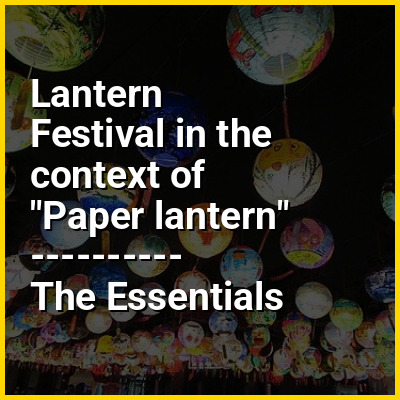
During the Lantern Festival, children go out at night carrying paper lanterns and solving riddles written on them (traditional Chinese: 猜燈謎; simplified Chinese: 猜灯谜; pinyin: cāidēngmí). In ancient times, lanterns were fairly simple, and only the emperor and noblemen had large, ornate ones. In modern times, lanterns have been embellished with intricate designs. For example, lanterns are now often made in the shape of animals. The lanterns can symbolize the people letting go of their past selves and getting new ones, which they will let go of the next year. The lanterns are almost always red to symbolize good fortune.
↓ Menu
HINT:

In this Dossier

Lantern Festival in the context of Chinese New Year

Chinese New Year, also known as the Spring Festival (see also § Names), marks the beginning of a new year on the traditional lunisolar Chinese calendar. It is one of the most important holidays in Chinese culture and was placed on the UNESCO Intangible Cultural Heritage of Humanity list in 2024. Marking the end of winter and the beginning of spring, this festival takes place from Chinese New Year's Eve (the evening preceding the first day of the year) to the Lantern Festival, held on the 15th day of the year. The first day of the Chinese New Year falls on the new moon that appears between 21 January and 20 February.

The Chinese New Year is associated with several myths and customs. The festival was traditionally a time to honour deities and ancestors. Throughout China, different regions celebrate the New Year with distinct local customs and traditions. Chinese New Year's Eve is an occasion for Chinese families to gather for the annual reunion dinner. Traditionally, every family would thoroughly clean their house, symbolically sweeping away any ill fortune to make way for incoming good luck. Windows and doors may be decorated with red paper-cuts and couplets representing themes such as good fortune, happiness, wealth, and longevity. Other activities include lighting firecrackers and giving money in red envelopes.

View the full Wikipedia page for Chinese New Year
↑ Return to Menu