Landa de Matamoros is a town in Landa de Matamoros Municipality located in the northeast of the Mexican state of Querétaro in central Mexico. It is part of the Sierra Gorda region, which consists of rugged mountains, canyons and wide diversity of flora and fauna, with the municipality's flora representing about 25% of all the plant diversity in Mexico. In the pre-Hispanic period, the area was heavily influenced by Huastecas and local cultures, later dominated by the Chichimecas, especially the Pames. Complete Spanish domination came late, in the mid 18th century, but two of the five Franciscan mission complexes built to solidify this domination were built in the municipality. Today, Landa de Matamoros remains rural and impoverished with a high rate of emigration out of the area, especially to the United States. Remittances sent by relatives from there now form most of the municipality's economy.
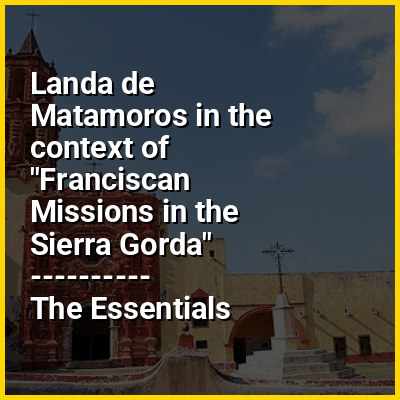
Landa de Matamoros in the context of Sierra Gorda
The Sierra Gorda (lit. 'fat mountain(s)') is an ecological region centered on the northern third of the Mexican state of Querétaro and extending into the neighboring states of Guanajuato, Hidalgo and San Luis Potosí. Within Querétaro, the ecosystem extends from the center of the state starting in parts of San Joaquín and Cadereyta de Montes municipalities and covering all of the municipalities of Peñamiller, Pinal de Amoles, Jalpan de Serra, Landa de Matamoros and Arroyo Seco, for a total of 250 km of territory. The area is extremely rugged with high steep mountains and deep canyons. As part of the Huasteca Karst, it also contains many formations due to erosion of limestone, especially pit caves known locally as sótanos. The area is valued for its very wide diversity of plant and animal life, which is due to the various microenvironments created by the ruggedness of the terrain and wide variation in rainfall. This is due to the mountains’ blocking of moisture coming in from the Gulf of Mexico, which generally makes the east side fairly moist and the west semiarid scrub brush. Most of the region is protected in two biosphere reserves, with the one centered in Querétaro established in 1997 and the one centered in Guanajuato established in 2007. The Sierra Gorda is considered to be the far west of the La Huasteca region culturally and it is home to the Franciscan Missions in the Sierra Gorda of Querétaro World Heritage Site. Sierra Gorda has become the first National Park in Mexico to join the EarthCheck Sustainable Destinations program.
View the full Wikipedia page for Sierra Gorda