Lü Buwei in the context of Queen Dowager Zhao


Lü Buwei in the context of Queen Dowager Zhao

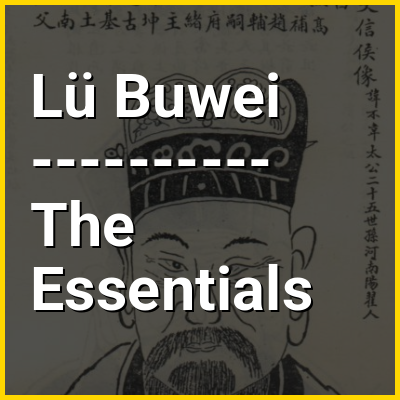
⭐ Core Definition: Lü Buwei

Lü Buwei (291–235 BCE) was a Chinese merchant and politician of the Qin state during the Warring States period. Originally an influential merchant from the Wey () state, Lü Buwei met and befriended King Zhuangxiang of Qin, who was then a minor prince serving as a hostage in the Zhao state. Through bribes and machinations, Lü Buwei succeeded in helping King Zhuangxiang become the heir apparent to the Qin throne. In 249 BCE, after King Zhuangxiang ascended the throne following the death of his father, King Xiaowen, he appointed Lü Buwei as his chancellor (相國) and ennobled him as "Marquis Wenxin" (文信侯). After King Zhuangxiang's death in 247 BCE, Lü Buwei became the chancellor and regent to King Zhuangxiang's young son, Ying Zheng, who later became Qin Shi Huang (First Emperor of the Qin dynasty).

In 235 BCE, after being implicated in a scandal involving the Queen Dowager Zhao (Ying Zheng's mother) and her illicit lover Lao Ai, Lü Buwei was stripped of his posts and titles and was banished to the remote Shu region in the south of Qin. While in exile, Lü Buwei committed suicide by consuming poison.
↓ Menu
HINT:

In this Dossier

Lü Buwei in the context of Qin Shi Huang

Qin Shi Huang (Chinese: 秦始皇, Qín Shǐ Huáng, pronunciation; February 259 – 12 July 210 BC) was the founder of the Qin dynasty and the first emperor of China. Rather than maintain the title of "king" (wáng ) borne by the previous Shang and Zhou rulers, he assumed the invented title of "emperor" (huángdì 皇帝), which would see continuous use by monarchs in China for the next two millennia.

Born in Handan, the capital of Zhao, as Ying Zheng (嬴政) or Zhao Zheng (趙政), his parents were King Zhuangxiang of Qin and Lady Zhao. The wealthy merchant Lü Buwei assisted him in succeeding his father as the king of Qin, after which he became King Zheng of Qin (秦王政). By 221 BC, he had conquered all the other warring states and unified all of China, and he ascended the throne as China's first emperor. During his reign, his generals greatly expanded the size of the Chinese state: campaigns south of Chu permanently added the Yue lands of Hunan and Guangdong to the Sinosphere, and campaigns in Inner Asia conquered the Ordos Plateau from the nomadic Xiongnu, although the Xiongnu later rallied under Modu Chanyu.

View the full Wikipedia page for Qin Shi Huang
↑ Return to Menu

Lü Buwei in the context of Lüshi Chunqiu

The Lüshi Chunqiu (simplified Chinese: 吕氏春秋; traditional Chinese: 呂氏春秋; lit. 'Lü's Spring and Autumn'), abbreviated Lülan 吕览 "Lu Survey", also known in English as Master Lü's Spring and Autumn Annals, is an encyclopedic Chinese classic text compiled around 239 BC under the patronage of late pre-imperial Qin Chancellor Lü Buwei. In the evaluation of Michael Loewe, "The Lü shih ch'un ch'iu is unique among early works in that it is well organized and comprehensive, containing extensive passages on such subjects as music and agriculture, unknown elsewhere." One of the longest early texts, it extends to over 100,000 words.

Combining ideas from many different 'schools', it was traditionally classified as 'Syncretist', though there was no school that called itself Syncretist. Almost certainly written for review by Qin authorities, or those who were going to come into a position of authority, Yuri Pines considered it more moral leaning than the Strategies of the Warring States.

View the full Wikipedia page for Lüshi Chunqiu
↑ Return to Menu