Kowloon Peninsula in the context of "Hong Kong Island"

Play Trivia Questions online!

or

Skip to study material about Kowloon Peninsula in the context of "Hong Kong Island"

Ad spacer

⭐ Core Definition: Kowloon Peninsula

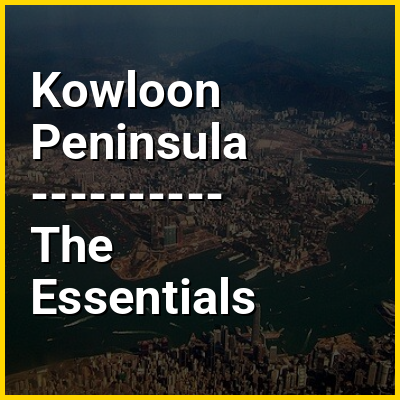
The Kowloon Peninsula is a peninsula that is part of the southern part of the main landmass in the territory of Hong Kong, alongside Victoria Harbour and facing toward Hong Kong Island. The Kowloon Peninsula and Ngong Shuen Chau comprises the Old Kowloon. The Old Kowloon and the area of New Kowloon are collectively known as Kowloon.

Geographically, the term "Kowloon Peninsula" may also refer to the area south of the mountain ranges of Beacon Hill, Lion Rock, Tate's Cairn, Kowloon Peak, etc. The peninsula covers five of the eighteen districts of Hong Kong. Kowloon Bay is located at the northeast of the peninsula.

↓ Menu

>>>PUT SHARE BUTTONS HERE<<<
In this Dossier

Kowloon Peninsula in the context of Hong Kong

Hong Kong is a special administrative region of China. Situated on China's southern coast just south of Shenzhen, it consists of Hong Kong Island, Kowloon, and the New Territories. With 7.5 million residents in a 1,114-square-kilometre (430 sq mi) territory, Hong Kong is the fourth-most densely populated region in the world.

Hong Kong was established as a colony of the British Empire after the Qing dynasty ceded Hong Kong Island in 1841–1842 as a consequence of losing the First Opium War. The colony expanded to the Kowloon Peninsula in 1860 and was further extended when the United Kingdom obtained a 99-year lease of the New Territories in 1898. Hong Kong was occupied by Japan from 1941 to 1945 during World War II. The territory was handed over from the United Kingdom to China in 1997. Hong Kong maintains separate governing and economic systems from that of mainland China under the principle of one country, two systems.

↑ Return to Menu

Kowloon Peninsula in the context of British Hong Kong

Hong Kong was under British rule from 1841 to 1997, except for a brief period of Japanese occupation during the Second World War from 1941 to 1945. It was a Crown colony of the United Kingdom from 1841 to 1981, and a dependent territory from 1981 to 1997. The colonial period began with the British occupation of Hong Kong Island under the Convention of Chuenpi in 1841 of the Victorian era, and ended with the handover of Hong Kong in July 1997.

In accordance with Article III of the Treaty of Nanking of 1842, signed in the aftermath of the First Opium War, the island of Hong Kong was ceded in perpetuity to Great Britain. It was established as a Crown colony in 1843. In 1860, the British expanded the colony with the addition of the Kowloon Peninsula and was further extended in 1898 when the British obtained a 99-year lease of the New Territories. Although the Qing had to cede Hong Kong Island and Kowloon in perpetuity as per the treaty, the leased New Territories comprised 86.2% of the colony and more than half of the entire colony's population. With the lease nearing its end during the late 20th century, Britain did not see any viable way to administer the colony by dividing it, whilst the People's Republic of China would not consider extending the lease or allowing continued British administration thereafter.
↑ Return to Menu

Kowloon Peninsula in the context of Kowloon

Kowloon (/ˌkˈln/) is one of the three areas of Hong Kong, along with Hong Kong Island and the New Territories. It is an urban area comprising the Kowloon Peninsula and New Kowloon. It has a population of 2,019,533 and a population density of 43,033/km (111,450/sq mi) in 2006. It is the smallest, second most populous, and most densely populated of the divisions.

↑ Return to Menu

Kowloon Peninsula in the context of Handover of Hong Kong

The handover of Hong Kong from the United Kingdom of Great Britain and Northern Ireland to the People's Republic of China occurred at midnight on 1 July 1997. This event ended 156 years of British rule, dating back to the cession of Hong Kong Island in 1841 during the First Opium War.

Hong Kong was a colony of the British Empire from 1841, except during the Japanese occupation of Hong Kong from 1941 to 1945. Its territory expanded after the First Opium War with the addition of the Kowloon Peninsula and Stonecutters Island in 1860 and the New Territories in 1898 under a 99-year lease. The 1984 Sino–British Joint Declaration set the terms of the 1997 handover, under which China pledged to uphold "one country, two systems" for 50 years. Hong Kong became China's first special administrative region, followed by Macau in 1999 under similar arrangements. With a population of about 6.5 million in 1997, Hong Kong made up 97 percent of the population of all the British Dependent Territories and was Britain's last major colony.

↑ Return to Menu

Kowloon Peninsula in the context of Convention for the Extension of Hong Kong Territory

The Convention between the United Kingdom and China, Respecting an Extension of Hong Kong Territory, commonly known as the Convention for the Extension of Hong Kong Territory or the Second Convention of Peking, was a lease and unequal treaty signed between Qing China and the United Kingdom in Peking on 9 June 1898, leasing to the United Kingdom for 99 years, at no charge, the New Territories (as the area became known) and northern Kowloon, including 235 islands.

↑ Return to Menu

Kowloon Peninsula in the context of Lantau Island

Lantau Island (also Lantao Island, Lan Tao or Lan Tau) is the largest island in Hong Kong. Located west of Hong Kong Island and the Kowloon Peninsula, it is part of the New Territories. Administratively, most of Lantau Island is part of the Islands District of Hong Kong. A small northeastern portion of the island is located in the Tsuen Wan District.

Originally an island with fishing villages, it has been developed since the late 20th century with the construction of Tung Chung New Town on its north-western coast and the completion of several major infrastructure projects, including Lantau Link (1997), Hong Kong International Airport (1998), Hong Kong Disneyland (2005), and the Ngong Ping 360 gondola lift (2006).

↑ Return to Menu

Kowloon Peninsula in the context of Victoria Harbour

22°17′15.91″N 114°10′25.03″E / 22.2877528°N 114.1736194°E / 22.2877528; 114.1736194

Victoria Harbour is a natural landform harbour in Hong Kong separating Hong Kong Island in the south from the Kowloon Peninsula to the north. It acts as both a major trading hub and tourist attraction of Hong Kong in general. Lying in the middle of the territory's dense urban region, the harbour is also the site of annual fireworks displays and promenades which are used as gathering attractions for local residents and tourists.

↑ Return to Menu

Kowloon Peninsula in the context of Ngong Shuen Chau

Stonecutters Island or Ngong Shuen Chau is a former island in Victoria Harbour, Hong Kong. Following land reclamation, it is now attached to the Kowloon Peninsula.

↑ Return to Menu

Kowloon Peninsula in the context of Kowloon Bay

Kowloon Bay (Chinese: 九龍灣) is a bay within Victoria Harbour and a neighbourhood within Kowloon, Hong Kong.

The bay is located at the east of the Kowloon Peninsula and north of Hong Kong Island. It is the eastern portion of Victoria Harbour, between Hung Hom and Lei Yue Mun. The bay was divided into half when the 13/31 runway of the former Kai Tak International Airport was constructed in the middle of the bay in the mid-1950s.

↑ Return to Menu