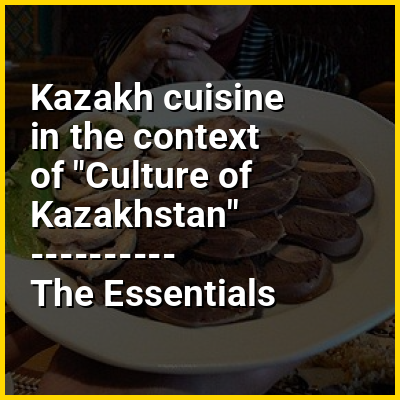
The cuisine of Kazakhstan, also known as Kazakhstani cuisine, encompasses all traditional and modern cuisines of Kazakhstan. The dominant cuisine is the traditional food of the ethnic Kazakhs, who make up about 70% of the country's population. It is focused on mutton and horse meat, as well as various milk products. For hundreds of years, Kazakhs were predominantly herders who raised fat-tailed sheep, Bactrian camels, and horses, relying on these animals for transportation, clothing, and food. The cooking techniques and major ingredients have been strongly influenced by the nation's nomadic way of life. For example, most cooking techniques are aimed at long-term preservation of food. There is a large practice of salting and drying meat so that it will last, and there is a preference for sour milk, as it is easier to save in a nomadic lifestyle.
Meat in various forms has always been the primary ingredient of Kazakh cuisine, and traditional Kazakh cooking is based on boiling. Horse and mutton are the most popular forms of meat and are most often served in large uncut pieces which have been boiled. Kazakhs cared especially for horses which they intended to slaughter—keeping them separate from other animals and feeding them so much that they often became so fat they had difficulty moving.