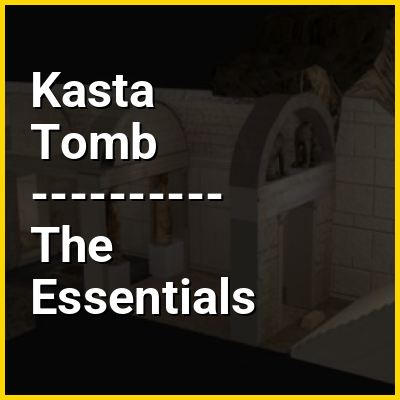
The Kasta Tomb (Greek: Τύμβος Καστά), also known as the Amphipolis Tomb (Greek: Τάφος της Αμφίπολης), is the largest ancient tumulus (burial mound) ever discovered in Greece, and by comparison dwarfs that of Philip II of Macedon, father of Alexander the Great, in Vergina.
It is an ancient Macedonian tomb of the last quarter of the 4th c. BC, and is enclosed in the Kasta mound near the ancient city of Amphipolis, Central Macedonia, in northern Greece. The first excavations at the mound in 1964 led to exposure of the perimeter wall, and further excavations in the 1970s uncovered many other ancient remains. The inner tomb was first discovered in 2012 and entered in August 2014.