Ka statue of king Hor in the context of Thirteenth Dynasty


Ka statue of king Hor in the context of Thirteenth Dynasty

⭐ Core Definition: Ka statue of king Hor

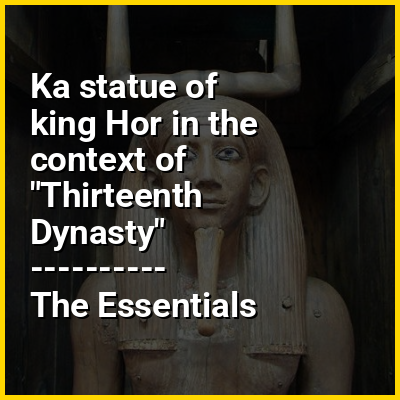
The Ka statue of King Hor dates to the Thirteenth Dynasty of Ancient Egypt around 1750 BC. It is now on display in the Egyptian Museum in Cairo and regarded as one of the major works of Egyptian art.

The statue was excavated in 1894 in the tomb of King Hor that was found by a team of excavators under the direction of Jacques de Morgan. The tomb is located close to the pyramid of Amenemhat III at Dahshur.
↓ Menu
HINT:

In this Dossier

Ka statue of king Hor in the context of Ka statue

A ka statue is a type of ancient Egyptian statue intended to provide a resting place for the ka (life-force or spirit) of the person after death. The ancient Egyptians believed the ka, along with the physical body, the name, the ba (personality or soul), and the šwt (shadow), made up the five aspects of a person.

View the full Wikipedia page for Ka statue
↑ Return to Menu