Juan José Arévalo in the context of Jacobo Arbenz Guzmán


Juan José Arévalo in the context of Jacobo Arbenz Guzmán

⭐ Core Definition: Juan José Arévalo

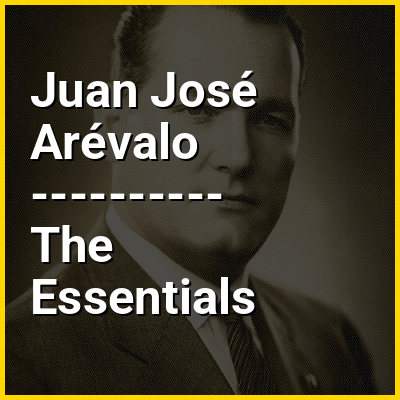
Juan José Arévalo Bermejo (10 September 1904 – 8 October 1990) was a Guatemalan statesman and professor of philosophy who became Guatemala's first democratically elected president in 1945. He was elected following a popular uprising against the United States-backed dictator Jorge Ubico that began the Guatemalan Revolution. He remained in office until 1951, surviving 25 coup attempts. He did not contest the election of 1951, instead choosing to hand over power to Jacobo Árbenz. As president, he enacted several social reform policies, including an increase in the minimum wage and a series of literacy programs. He also oversaw the drafting of a new constitution in 1945. His son, Bernardo, became President of Guatemala in 2024.

Because of his reforms and policies that transcended his time, Juan José Arévalo is considered the most popular and influential president in the history of Guatemala.
↓ Menu
HINT:

In this Dossier

Juan José Arévalo in the context of 1954 Guatemalan coup d'état

The 1954 Guatemalan coup d'état (Spanish: Golpe de Estado en Guatemala de 1954) deposed the democratically elected Guatemalan president Jacobo Árbenz and marked the end of the Guatemalan Revolution. The coup installed the military dictatorship of Carlos Castillo Armas, the first in a series of U.S.-backed authoritarian rulers in Guatemala. The coup was precipitated by a CIA covert operation code-named PBSuccess.

The Guatemalan Revolution began in 1944, after a popular uprising toppled the military dictatorship of Jorge Ubico. Juan José Arévalo was elected president in Guatemala's first democratic election. He introduced a minimum wage and near-universal suffrage. Arévalo was succeeded in 1951 by Árbenz, who instituted land reforms which granted property to landless peasants. The Guatemalan Revolution was disliked by the U.S. federal government, which was predisposed during the Cold War to see it as communist. This perception grew after Árbenz had been elected and formally legalized the communist Guatemalan Party of Labour. The U.S. government feared that Guatemala's example could inspire nationalists wanting social reform throughout Latin America. The United Fruit Company (UFC), whose highly profitable business had been affected by the softening of exploitative labor practices in Guatemala, engaged in an influential lobbying campaign to persuade the U.S. to overthrow the Guatemalan government. U.S. president Harry S. Truman authorized Operation PBFortune to topple Árbenz in 1952, which was a precursor to PBSuccess.

View the full Wikipedia page for 1954 Guatemalan coup d'état
↑ Return to Menu

Juan José Arévalo in the context of Jacobo Árbenz

Juan Jacobo Árbenz Guzmán (Spanish: [xwaŋ xaˈkoβo ˈaɾβens ɣusˈman]; 14 September 1913 – 27 January 1971) was a Guatemalan military officer and politician who served as the 25th president of Guatemala. He was Minister of National Defense from 1944 to 1950, before he became the second democratically elected President of Guatemala, from 1951 to 1954. He was a major figure in the ten-year Guatemalan Revolution, which represented some of the few years of representative democracy in Guatemalan history. The landmark program of agrarian reform Árbenz enacted as president was very influential across Latin America.

Árbenz was born in 1913 to a wealthy family, son of a Swiss German father and a Guatemalan mother. He graduated with high honors from a military academy in 1935, and served in the army until 1944, quickly rising through the ranks. During this period, he witnessed the violent repression of agrarian laborers by the United States-backed dictator Jorge Ubico, and was personally required to escort chain-gangs of prisoners, an experience that contributed to his progressive views. In 1938, he met and married María Vilanova, who was a great ideological influence on him, as was José Manuel Fortuny, a Guatemalan communist. In October 1944, several civilian groups and progressive military factions led by Árbenz and Francisco Arana rebelled against Ubico's repressive policies. In the elections that followed, Juan José Arévalo was elected president, and began a highly popular program of social reform. Árbenz was appointed Minister of Defense, and played a crucial role in putting down a military coup in 1949.

View the full Wikipedia page for Jacobo Árbenz
↑ Return to Menu

Juan José Arévalo in the context of Carlos Castillo Armas

Carlos Castillo Armas (locally ['kaɾlos kas'tiʝo 'aɾmas]; 4 November 1914 – 26 July 1957) was a Guatemalan military officer and politician who was the 28th president of Guatemala, serving from 1954 to 1957 after taking power in a coup d'état. A member of the far-right National Liberation Movement (MLN) party, his authoritarian government was closely allied with the United States.

Born to a planter, out of wedlock, Castillo Armas was educated at Guatemala's military academy. A protégé of Colonel Francisco Javier Arana, he joined Arana's forces during the 1944 uprising against President Federico Ponce Vaides. This began the Guatemalan Revolution and the introduction of representative democracy to the country. Castillo Armas joined the General Staff and became director of the military academy. Arana and Castillo Armas opposed the newly elected government of Juan José Arévalo; after Arana's failed 1949 coup, Castillo Armas went into exile in Honduras. Seeking support for another revolt, he came to the attention of the US Central Intelligence Agency (CIA). In 1950 he launched a failed assault on Guatemala City, before escaping back to Honduras. Influenced by lobbying by the United Fruit Company and Cold War fears of communism, in 1952 the US government of President Harry Truman authorized Operation PBFortune, a plot to overthrow Arévalo's successor, President Jacobo Árbenz. Castillo Armas was to lead the coup, but the plan was abandoned before being revived in a new form by US President Dwight D. Eisenhower in 1953.

View the full Wikipedia page for Carlos Castillo Armas
↑ Return to Menu

Juan José Arévalo in the context of Guatemalan presidential election, 1944

Presidential elections were held in Guatemala between 17 and 19 December 1944. The October Revolution had overthrown Jorge Ubico, the American-backed dictator, after which a junta composed of Francisco Javier Arana, Jacobo Árbenz and Jorge Toriello took power, and quickly announced presidential elections, as well as elections for a constitutional assembly. The subsequent elections were broadly considered free and fair, although only literate men were given the vote. Unlike in similar historical situations, none of the junta members stood for election. The front-runner was the university professor Juan José Arévalo, nominated by the National Renovation Party. His closest challenger was Adrián Recinos, whose campaign included a number of individuals identified with the Ubico regime. The ballots were tallied on 19 December and Arévalo won in a landslide with 86.25% of the vote, receiving more than four times as many votes as the other candidates combined. The Constitutional Assembly elections took place on 28–30 December, with the United Front of Arevalist Parties winning 50 of the 65 seats.

View the full Wikipedia page for Guatemalan presidential election, 1944
↑ Return to Menu

Juan José Arévalo in the context of Francisco Arana

Francisco Javier Arana Castro (Latin American Spanish: [fɾanˈsisko xaˈβjeɾ aˈɾana ˈkastɾo]; 3 December 1905 – 18 July 1949) was a Guatemalan military leader and one of the three members of the revolutionary junta that ruled Guatemala from 20 October 1944 to 15 March 1945 during the early part of the Guatemalan Revolution. A major in the Guatemalan army under the dictator Jorge Ubico, he allied with a progressive faction of the army to topple Ubico's successor Federico Ponce Vaides. He led the three-man junta that oversaw the transition to a democratic government, although he was personally reluctant to allow the elected President Juan José Arévalo to take office in 1945. He served as the Chief of the Armed Forces in the new government until 1949. On 18 July 1949 he was killed in a shootout with supporters of the Arévalo government after he threatened to launch a coup.

View the full Wikipedia page for Francisco Arana
↑ Return to Menu

Juan José Arévalo in the context of Bernardo Arévalo

César Bernardo Arévalo de León ([beɾˈnaɾ.ðo aˈɾe.βa.lo]; born 7 October 1958) is a Guatemalan diplomat, sociologist, writer, and politician serving as the 52nd and current president of Guatemala since 2024. A member and co-founder of the Semilla party, he previously served as a deputy in the Congress of Guatemala from 2020 to 2024, as ambassador to Spain from 1995 to 1996 and as deputy minister of foreign affairs from 1994 to 1995.

Arévalo was born in Montevideo, Uruguay, during the exile of his father, former president Juan José Arévalo. He graduated from the Hebrew University of Jerusalem with a bachelor of arts in sociology. In the 1980s, Arévalo joined the Ministry of Foreign Affairs. He held several key positions, including deputy minister of foreign affairs and ambassador to Spain. After his diplomatic service, he joined Interpeace, where he served as an advisor on conflict resolution. Later, he graduated from Utrecht University with a doctorate in philosophy and social anthropology. Arévalo returned to Guatemala as a result of the 2015 protests, where he co-founded an analysis group that later became the Movimiento Semilla political party. He was elected as a member of Congress in the 2019 election, then as general secretary of the party in 2022.

View the full Wikipedia page for Bernardo Arévalo
↑ Return to Menu

Juan José Arévalo in the context of National Renovation Party

The National Renovation Party (Spanish: Partido Renovación Nacional, PRN) was a reformist and progressive political party in Guatemala that was supportive of the government of Jacobo Arbenz. The PRN was founded by a group of the young revolutionaries on 1 July 1944, following the overthrow of dictator Jorge Ubico and the beginning of the Guatemalan Revolution. Its founders included Juan José Orozco Posadas, and Mario Efraín Nájera Farfán. The PRN was known as a “teachers' party”, in contrast to the Popular Liberation Front (FPL), which was seen as a "students' party”. During this period the PRN and the FPL were the largest of the revolutionary parties.

In the 1944 elections, the first democratic elections that had been held in the country, the PRN nominated Juan José Arévalo as its candidate. In November 1945 it merged with the FPL to form the Revolutionary Action Party (PAR) but split from it eighteen months later. This split was partially the result of ideological differences, and partially the result of manipulations by Arévalo, who preferred to deal with a fractured opposition. After some hesitation the PRN joined the Party of the Guatemalan Revolution in June 1952, but withdrew a month later. PRN was the smallest party in the coalition governments of Jacobo Árbenz (1951-1954). It was disbanded after the coup d'état of 1954.

View the full Wikipedia page for National Renovation Party
↑ Return to Menu