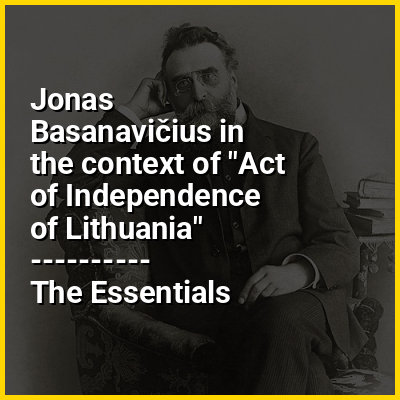
The Act of Independence of Lithuania (Lithuanian: Lietuvos Nepriklausomybės Aktas) or the Act of February 16th, also the Lithuanian Resolution on Independence (Lithuanian: Lietuvos Nepriklausomybės Nutarimas), was signed by the Council of Lithuania on February 16, 1918, proclaiming independence from Russia and the restoration of an independent State of Lithuania, governed by democratic principles, with Vilnius as its capital. The Act was signed by all twenty representatives of the Council, which was chaired by Jonas Basanavičius. The Act of February 16 was the result of a series of resolutions on the issue, including one issued by the Vilnius Conference and the Act of January 8. The path to the Act was long and complex because the German Empire exerted pressure on the Council to form an alliance. The Council had to carefully maneuver between the Germans, whose troops were present in Lithuania, and the demands of the Lithuanian people.
The immediate effects of the announcement of Lithuania's re-establishment of independence were limited. Publication of the Act was prohibited by the German authorities, and the text was distributed and printed illegally. The work of the Council was hindered, and Germans remained in control over Lithuania. The situation changed only when Germany lost World War I in the fall of 1918. In November 1918 the first Cabinet of Lithuania was formed, and the Council of Lithuania gained control over the territory of Lithuania. Independent Lithuania, although it would soon be battling the Wars of Independence, became a reality.