John Russell, 1st Earl of Bedford in the context of "Dissolution of the Monasteries"

Play Trivia Questions online!

or

Skip to study material about John Russell, 1st Earl of Bedford in the context of "Dissolution of the Monasteries"


⭐ Core Definition: John Russell, 1st Earl of Bedford

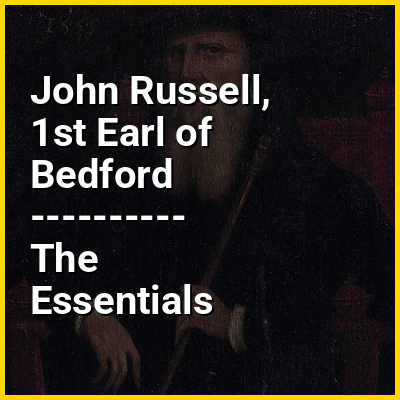
John Russell, 1st Earl of Bedford, KG, PC, JP (c. 1485 – 14 March 1555) was an English royal minister in the Tudor era. He served variously as Lord High Admiral and Lord Privy Seal. Among the lands and property he was given by Henry VIII after the Dissolution of the Monasteries, were the Abbey and town of Tavistock, and the area that is now Covent Garden. Russell is the ancestor of all subsequent Earls and Dukes of Bedford and Earls Russell, including John Russell, Prime Minister of the United Kingdom (1865-6), and Bertrand Russell, the philosopher (1872-1970).

↓ Menu

In this Dossier

John Russell, 1st Earl of Bedford in the context of Covent Garden

Covent Garden is a district in London, on the eastern fringes of the West End, between St Martin's Lane and Drury Lane. It is associated with the former fruit-and-vegetable market in the central square, now a popular shopping and tourist site, and with the Royal Opera House, itself known as "Covent Garden". The district is divided by the main thoroughfare of Long Acre, north of which is given over to independent shops centred on Neal's Yard and Seven Dials, while the south contains the central square with its street performers and most of the historical buildings, theatres and entertainment facilities, including the London Transport Museum and the Theatre Royal, Drury Lane.

The area was fields until briefly settled in the 7th century when it became the heart of the Anglo-Saxon trading town of Lundenwic, then abandoned at the end of the 9th century after which it returned to fields. By 1200 part of it had been walled off by the Abbot of Westminster Abbey for use as arable land and orchards, later referred to as "the garden of the Abbey and Convent", and later "the Convent Garden". Following the Dissolution of the Monasteries it was granted in 1552 by the young King Edward VI to John Russell, 1st Earl of Bedford (c.1485–1555), the trusted adviser to his father King Henry VIII. The 4th Earl commissioned Inigo Jones to build some fine houses to attract wealthy tenants. Jones designed the Italianate arcaded square along with the church of St Paul's. The design of the square was new to London and had a significant influence on modern town planning, acting as the prototype for new estates as London grew.

↑ Return to Menu

John Russell, 1st Earl of Bedford in the context of Bedford Place

The Bedford Estate is an estate in central London owned by the Russell family, which holds the peerage title of Duke of Bedford. The estate was originally based in Covent Garden, then stretched to include Bloomsbury in 1669. The Covent Garden property was sold for £2 million in 1913 by Herbrand Russell, 11th Duke of Bedford, to the MP and land speculator Harry Mallaby-Deeley, who sold his option to the Beecham family for £250,000; the sale was finalised in 1918.

↑ Return to Menu

John Russell, 1st Earl of Bedford in the context of Prayer Book Rebellion

The Prayer Book Rebellion or Western Rising was a popular revolt in Cornwall and Devon in 1549. In that year, the first Book of Common Prayer, presenting the theology of the English Reformation, was introduced. The change was widely unpopular, particularly in areas where firm Catholic religious loyalty (even after the Act of Supremacy in 1534) still existed, such as Lancashire. Along with poor economic conditions, the enforcement of English-language-only church services in Cornish-speaking areas led to an explosion of anger in Cornwall and Devon, initiating an uprising. At the gates of Exeter, the rising leaders announced, "and so we Cornishmen, whereof certain of us understand no English, utterly refuse this new English". In response, Edward Seymour, 1st Duke of Somerset, sent John Russell to suppress the revolt, with the rebels being defeated and its leaders executed two months after the beginning of hostilities. Up to 5,500 men were killed, mainly Cornish and Devonian Catholics.

↑ Return to Menu