James Monroe in the context of "16th United States Congress"

Play Trivia Questions online!

or

Skip to study material about James Monroe in the context of "16th United States Congress"

Ad spacer

⭐ Core Definition: James Monroe

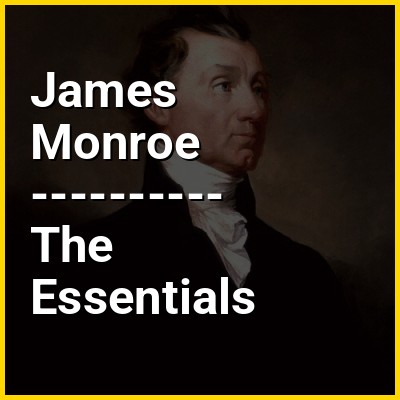
James Monroe (/mənˈr/ mən-ROH; April 28, 1758 – July 4, 1831) was an American Founding Father who served as the fifth president of the United States from 1817 to 1825. He was the last Founding Father to serve as president as well as the last president of the Virginia dynasty. Monroe was a member of the Democratic-Republican Party, and his presidency coincided with the Era of Good Feelings, concluding the First Party System era of American politics. He issued the Monroe Doctrine, a policy of limiting European colonialism in the Americas. Monroe previously served as Governor of Virginia, a member of the United States Senate, U.S. ambassador to France and Britain, the seventh secretary of state, and the eighth secretary of war.

During the American Revolutionary War, he served in the Continental Army. From 1780 to 1783, Monroe studied law under Thomas Jefferson and subsequently served as a delegate to both the Continental Congress and the Virginia Ratifying Convention. He opposed the ratification of the United States Constitution. In 1790, Monroe won election to the Senate where he became a leader of the Democratic-Republican Party. He left the Senate in 1794 to serve as President George Washington's ambassador to France but was recalled by Washington in 1796. Monroe won the election as Governor of Virginia in 1799 and strongly supported Jefferson's candidacy in the 1800 presidential election.
↓ Menu

>>>PUT SHARE BUTTONS HERE<<<
In this Dossier

James Monroe in the context of University of Virginia

The University of Virginia (UVA or Virginia) is a public research university in Charlottesville, Virginia, United States. It was founded in 1819 by Thomas Jefferson and contains his Academical Village, a UNESCO World Heritage Site. The original governing Board of Visitors included three U.S. presidents: Jefferson, James Madison, and James Monroe, the latter as sitting president of the United States at the time of its foundation. As its first two rectors, Presidents Jefferson and Madison played key roles in the university's foundation, with Jefferson designing both the original courses of study and the university's architecture.

Located within its 1,135-acre central campus, the university is composed of eight undergraduate and three professional schools: the School of Law, the Darden School of Business, and the School of Medicine. The university has been a member of the Association of American Universities since 1904.

↑ Return to Menu

James Monroe in the context of White House

The White House is the official residence and workplace of the president of the United States. Located at 1600 Pennsylvania Avenue NW in Washington, D.C., it has served as the residence of every U.S. president since John Adams in 1800 when the national capital was moved from Philadelphia. The White House is also a metonym for the Executive Office of the President.

The residence was designed by the Irish-born architect James Hoban in the Neoclassical style. Hoban modeled the building on Leinster House in Dublin, a building which today houses the Oireachtas, the Irish legislature. Constructed between 1792 and 1800, its exterior walls are Aquia Creek sandstone painted white. When Thomas Jefferson moved into the house in 1801, he and his architect Benjamin Henry Latrobe added low colonnades on each wing to conceal what then were stables and storage. In 1814, during the War of 1812, the mansion was set ablaze by British forces in the burning of Washington, destroying the interior and charring much of the exterior. Reconstruction began almost immediately, and President James Monroe moved into the partially reconstructed Executive Residence in October 1817. Exterior construction continued with the addition of the semicircular South Portico in 1824 and the North Portico in 1829.

↑ Return to Menu

James Monroe in the context of Missouri Compromise

The Missouri Compromise (also known as the Compromise of 1820) was federal legislation of the United States that balanced the desires of northern states to prevent the expansion of slavery in the country with those of southern states to expand it. It admitted Missouri as a slave state and Maine as a free state and declared a policy of prohibiting slavery in the remaining Louisiana Purchase lands north of the 36°30′ parallel. The 16th United States Congress passed the legislation on March 3, 1820, and President James Monroe signed it on March 6, 1820.

Earlier, in February 1819, Representative James Tallmadge Jr., a Democratic-Republican (Jeffersonian Republican) from New York, had submitted two amendments to Missouri's request for statehood that included restrictions on slavery. While the slave states earlier claimed Federal protection for slavery, they now objected to any bill that imposed federal restrictions on slavery and claimed that it was a state issue, as settled by the Constitution. However, with the Senate evenly split at the opening of the debates, both sections possessing 11 states, the admission of Missouri as a slave state would give the South an advantage. Northern critics including Federalists and Democratic-Republicans objected to the expansion of slavery into the Louisiana Purchase territory on the Constitutional inequalities of the three-fifths rule, which conferred Southern representation in the federal government derived from a state's slave population.

↑ Return to Menu

James Monroe in the context of John Quincy Adams

John Quincy Adams (/ˈkwɪnzi/ ; July 11, 1767 – February 23, 1848) was the sixth president of the United States, serving from 1825 to 1829. He previously served as the eighth United States secretary of state from 1817 to 1825. During his long diplomatic and political career, Adams served as a diplomatic minister and also as a member of the United States Congress representing Massachusetts in both chambers. He was the eldest son of John Adams, the second president, and First Lady Abigail Adams. Initially a Federalist like his father, he won election to the presidency as a member of the Democratic-Republican Party, and later, in the mid-1830s, became affiliated with the Whig Party.

Born in Braintree, Massachusetts, Adams spent much of his youth in Europe, where his father served as a diplomat. After returning to the United States, Adams established a successful legal practice in Boston. In 1794, President George Washington appointed Adams as the U.S. minister to the Netherlands, and Adams would serve in high-ranking diplomatic posts until 1801, when Thomas Jefferson took office as president. Federalist leaders in Massachusetts arranged for Adams's election to the United States Senate in 1802, but Adams broke with the Federalist Party over foreign policy and was denied re-election. In 1809, President James Madison, a member of the Democratic-Republican Party, appointed Adams as the U.S. minister to Russia. Multilingual, Adams held diplomatic posts for the duration of Madison's presidency, and he served as part of the American delegation that negotiated an end to the War of 1812. In 1817, President James Monroe selected Adams as his secretary of state. In that role, Adams negotiated the Adams–Onís Treaty in 1819, which transferred Florida to the United States, delineated the Sabine–Red–Arkansas–42nd parallel boundary, and formalized the U.S. renunciation of claims to Texas. He also helped formulate the Monroe Doctrine, which became a key tenet of U.S. foreign policy. In 1818, Adams was elected a member of the American Philosophical Society in Philadelphia.

↑ Return to Menu

James Monroe in the context of Charlottesville, Virginia

Charlottesville, colloquially known as C'ville, is an independent city in Virginia, United States. It is the county seat of Albemarle County, which surrounds the city, though the two are separate legal entities. The former capital of Virginia, it is named after Queen Charlotte. At the 2020 census, the city's population was 46,553. The Bureau of Economic Analysis combines the City of Charlottesville with Albemarle County for statistical purposes, bringing its population to approximately 160,000. Charlottesville is the heart of the Charlottesville metropolitan area, which includes Albemarle, Fluvanna, Greene, and Nelson counties.

Charlottesville was the home of two U.S. presidents, Thomas Jefferson and James Monroe. During their terms as Governors of Virginia, they lived in Charlottesville and traveled to and from Richmond, along the 71-mile historic Three Notch'd Road. Orange, located 26 miles (42 km) northeast of the city, was the hometown of President James Madison. The University of Virginia, founded by Jefferson, straddles the city's southwestern border. Jefferson's home and primary plantation, Monticello, located 3 miles (5 km) southeast of the city, is, along with the University of Virginia, a UNESCO World Heritage Site, each attracting thousands of tourists from across the country every year.

↑ Return to Menu

James Monroe in the context of John Forsyth (politician)

John Forsyth Sr. (October 22, 1780 – October 21, 1841) was a 19th-century American politician from Georgia. He represented the state in both the House of Representatives and the Senate, and also served as the 33rd Governor of Georgia. As a supporter of the policies of President Andrew Jackson, Forsyth was appointed the 13th United States Secretary of State by Jackson in 1834, and continued in that role until 1841 during the presidency of Martin Van Buren. He also served as US Minister to Spain during the presidency of James Monroe.

↑ Return to Menu

James Monroe in the context of Second Amendment to the United States Constitution

The Second Amendment (Amendment II) to the United States Constitution protects the right to keep and bear arms. It was ratified on December 15, 1791, along with nine other articles of the United States Bill of Rights. In District of Columbia v. Heller (2008), the Supreme Court affirmed that the right belongs to individuals, for self-defense in the home, while also including, as dicta, that the right is not unlimited and does not preclude the existence of certain long-standing prohibitions such as those forbidding "the possession of firearms by felons and the mentally ill" or restrictions on "the carrying of dangerous and unusual weapons". In McDonald v. City of Chicago (2010) the Supreme Court ruled that state and local governments are limited to the same extent as the federal government from infringing upon this right. New York State Rifle & Pistol Association, Inc. v. Bruen (2022) assured the right to carry weapons in public spaces with reasonable exceptions.

The Second Amendment was based partially on the right to keep and bear arms in English common law and was influenced by the English Bill of Rights 1689. Sir William Blackstone described this right as an auxiliary right, supporting the natural rights of self-defense and resistance to oppression, and the civic duty to act in concert in defense of the state. While both James Monroe and John Adams supported the Constitution being ratified, its most influential framer was James Madison. In Federalist No. 46, Madison wrote how a federal army could be kept in check by the militia, "a standing army ... would be opposed [by] militia." He argued that State governments "would be able to repel the danger" of a federal army, "It may well be doubted, whether a militia thus circumstanced could ever be conquered by such a proportion of regular troops." He contrasted the federal government of the United States to the European kingdoms, which he described as "afraid to trust the people with arms", and assured that "the existence of subordinate governments ... forms a barrier against the enterprises of ambition".

↑ Return to Menu

James Monroe in the context of Monroe County, New York

Monroe County is a county in the U.S. state of New York, located along Lake Ontario's southern shore. As of 2022, the population was 752,035, according to Census Bureau estimates. Its county seat and largest city is Rochester. The county is named after James Monroe, the fifth president of the United States. Monroe County is part of the upstate Rochester, NY Metropolitan Statistical Area. The county is part of the Finger Lakes region of the state.

↑ Return to Menu