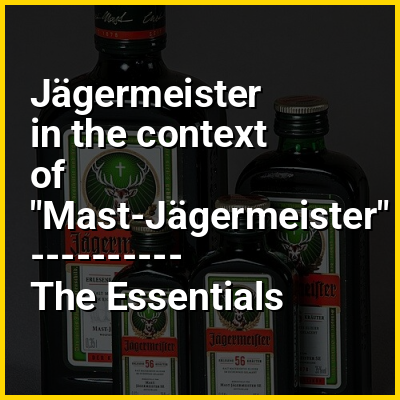
Jägermeister (/ˈjeɪɡərmaɪstər/ YAY-gər-my-stər, German: [ˈjɛːɡɐˌmaɪstɐ] ) is a German digestif made with 56 herbs and spices. Developed in 1934 by Wilhelm and Curt Mast, it has an alcohol by volume of 35% (61 degrees proof, or US 70 proof). The recipe has not changed since its creation, and the drink continues to be sold in a green glass bottle. It is the flagship product of Mast-Jägermeister SE headquartered in Wolfenbüttel, Germany.
HINT:
In this Dossier
Jägermeister in the context of Wolfenbüttel
Wolfenbüttel (German pronunciation: [ˌvɔlfn̩ˈbʏtl̩] ; Low German: Wulfenbüddel) is a town in Lower Saxony, Germany, the administrative capital of Wolfenbüttel District. It is best known as the location of the internationally renowned Herzog August Library and for having the largest concentration of timber-framed buildings in Germany, around 1,000. It is an episcopal see of the Evangelical Lutheran Church in Brunswick. It is also home to the Jägermeister distillery, houses a campus of the Ostfalia University of Applied Sciences, and the Landesmusikakademie of Lower Saxony.
View the full Wikipedia page for Wolfenbüttel