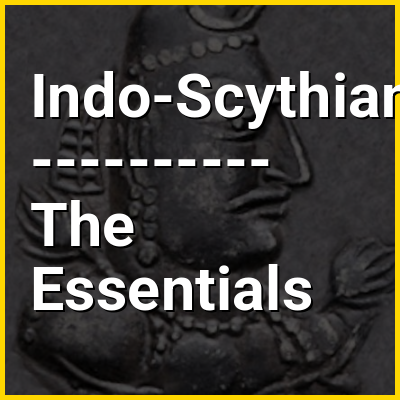
The Indo-Scythian Kingdom, also known as Indo-Sakas, were a group of nomadic people of Iranic Scythian origin who migrated from Central Asia southward into the Indus Valley region of present-day Pakistan and also regions of Afghanistan, Eastern Iran and northern India. The migrations persisted from the middle of the second century BCE to the fourth century CE.
The first Saka king in the subcontinent was Maues/Moga (first century BCE) who established Saka power in Gandhara, the Indus Valley, and other regions. The Indo-Scythians extended their supremacy over the north-western subcontinent, conquering the Indo-Greeks and other local peoples. They were apparently subjugated by the Kushan Empire's Kujula Kadphises or Kanishka. The Saka continued to govern as satrapies, forming the Northern Satraps and Western Satraps. The power of the Saka rulers began to decline during the 2nd century CE after the Indo-Scythians were defeated by the Satavahana emperor Gautamiputra Satakarni. Indo-Scythian rule in the northwestern subcontinent ended when the last Western Satrap, Rudrasimha III, was defeated by the Gupta emperor Chandragupta II in 395 CE.