Immunoglobulin E antibodies in the context of Type I hypersensitivity


Immunoglobulin E antibodies in the context of Type I hypersensitivity

⭐ Core Definition: Immunoglobulin E antibodies

Immunoglobulin E (IgE) is a type of antibody (or immunoglobulin (Ig) "isoform") that has been found only in mammals. IgE is synthesised by plasma cells. Monomers of IgE consist of two heavy chains (ε chain) and two light chains, with the ε chain containing four Ig-like constant domains (Cε1–Cε4). IgE is thought to be an important part of the immune response against infection by certain parasitic worms, including Schistosoma mansoni, Trichinella spiralis, and Fasciola hepatica. IgE is also utilized during immune defense against certain protozoan parasites such as Plasmodium falciparum. IgE may have evolved as a defense to protect against venoms.

IgE also has an essential role in type I hypersensitivity, which manifests in various allergic diseases, such as allergic asthma, most types of sinusitis, allergic rhinitis, food allergies, and specific types of chronic urticaria and atopic dermatitis. IgE also plays a pivotal role in responses to allergens, such as anaphylactic reactions to drugs, bee stings, and antigen preparations used in desensitization immunotherapy.
↓ Menu
HINT:

In this Dossier

Immunoglobulin E antibodies in the context of Allergy

An allergy is an exaggerated immune response where the body mistakenly identifies an ordinarily harmless allergen as a threat. Allergic reactions give rise to allergic diseases such as hay fever, allergic conjunctivitis, allergic asthma, atopic dermatitis, food allergies, and anaphylaxis. Symptoms of allergic diseases may include red eyes, an itchy rash, sneezing, coughing, a runny nose, shortness of breath, or swelling.

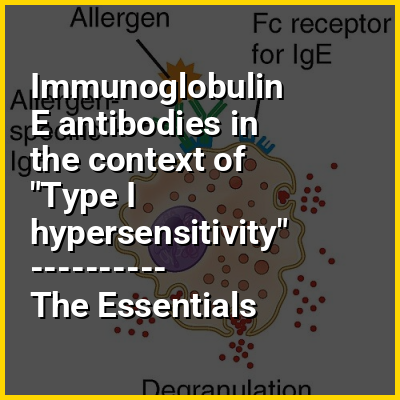
Common allergens include pollen, certain foods, metals, insect stings, and medications. The development of allergies is due to genetic and environmental factors. The mechanism of allergic reactions involves immunoglobulin E antibodies (IgE) binding to an allergen and then to a receptor on mast cells or basophils, where they trigger the release of inflammatory chemicals such as histamine. Diagnosis is typically based on a person's medical history. Further testing of the skin or blood may be useful in certain cases. Positive tests, however, may not necessarily mean there is a significant allergy to the substance in question.

View the full Wikipedia page for Allergy
↑ Return to Menu