Ilha de Vera Cruz in the context of Portuguese navigators


Ilha de Vera Cruz in the context of Portuguese navigators

⭐ Core Definition: Ilha de Vera Cruz

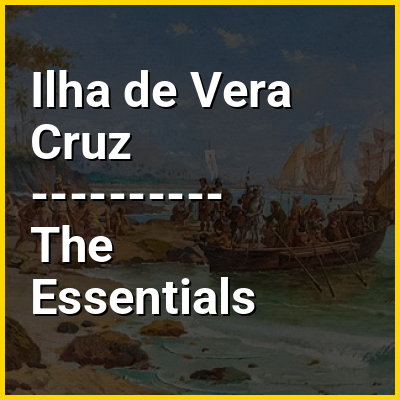
Ilha de Vera Cruz (Portuguese pronunciation: [ˈiʎɐ dʒi ˈvɛɾɐ ˈkɾu(j)s]) (Portuguese for Island of the True Cross) was the first name given by the Portuguese navigators to the northeast coast of what later became Brazil. The name was changed to Terra de Santa Cruz (Land of the Holy Cross) in 1503.

When the Portuguese fleet, under Pedro Álvares Cabral, first officially touched land in South America on 22 April 1500, they thought they had found an island, as reflected in the chosen name. They took possession for the Kingdom of Portugal of what was believed to be an island of strategic importance on a western connection between Portugal and the Moluccas and other islands of the East Indies. This discovery marked the beginning of Portuguese colonization in South America. The name was changed to Terra de Santa Cruz when it was realized that it was not an island, but in fact part of a continent.
↓ Menu
HINT:

In this Dossier

Ilha de Vera Cruz in the context of Discovery of Brazil

The first arrival of European explorers to the territory of present-day Brazil is often credited to Portuguese navigator Pedro Álvares Cabral, who sighted the land later named Island of Vera Cruz, near Monte Pascoal, on 22 April 1500 while leading an expedition to India. Cabral's voyage is part of the so-called Portuguese discoveries.

Although used almost exclusively in relation to Pedro Álvares Cabral's voyage, the term "discovery of Brazil" can also refer to the arrival in late 1499 of part of the expedition led by Alonso de Ojeda, in which Amerigo Vespucci took part, and also to the expedition led by Spanish navigator and explorer Vicente Yáñez Pinzón. He reached the Cape of Santo Agostinho [pt], a promontory located in the current state of Pernambuco, on 26 January 1500. This is the oldest confirmed European landing in Brazilian territory.

View the full Wikipedia page for Discovery of Brazil
↑ Return to Menu

Ilha de Vera Cruz in the context of Captaincies of Brazil

The Captaincies of Brazil (Portuguese: Capitanias do Brasil) were captaincies of the Portuguese Empire, administrative divisions and hereditary fiefs of Portugal in the colony of Terra de Santa Cruz, later called Brazil, on the Atlantic coast of northeastern South America. Each was granted to a single donee, a Portuguese nobleman who was given the title captain General.

Beginning in the early 16th century, the Portuguese monarchy used proprietorships or captaincies—land grants with extensive governing privileges—as a tool to colonize new lands. Prior to the grants in Brazil, the captaincy system had been successfully used in territories claimed by Portugal—-notably including Madeira, the Azores, and other Atlantic islands.

View the full Wikipedia page for Captaincies of Brazil
↑ Return to Menu