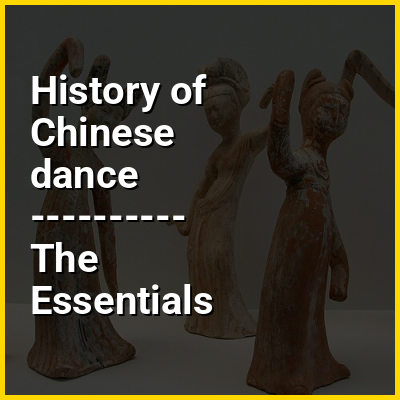
Dance in China has a long recorded history. Depictions of dancing in China appeared over 4,000 years ago. The early dances may be folk dances or ritual dances, some of which developed into court dances. The most important of the early dances served important ritual and ceremonial roles and are known as yayue, which continued to be performed at the imperial court until the Qing dynasty. A profusion of dances in popular and court entertainment as well as folk dances have been recorded in ancient texts. The art of dance in China reached a peak during the Tang dynasty (618–907 CE) when numerous dances were recorded. Dancing as an individual art form declined in the later eras when dances become incorporated into operas and female dancing also declined when footbinding became more prevalent. In more recent times dance has enjoyed a resurgence, and it is widely performed by the public and professionals alike.
There are continuous written records of Chinese dances for over two thousands years. Some forms of dancing are still performed today, for example, dancing with long sleeves has been recorded at least as early as the Zhou dynasty (c. 1045–256 BCE). Some of the best-known Chinese dances, such as the Lion dance, can also be traced to the Tang dynasty or earlier, while others may have existed in different forms in the early eras, and many were known from at least the Song era. While many Chinese dances have ancient pedigree, dance is also a continually evolving art form and modern developments in Chinese dances are continuing apace.