Herpes in the context of Cold sore


Herpes in the context of Cold sore

⭐ Core Definition: Herpes

Herpes simplex, often known simply as herpes, is a viral infection caused by the herpes simplex virus. Herpes infections are categorized by the area of the body that is infected. The two major types of herpes are oral herpes and genital herpes, though other forms also exist.

Oral herpes involves the face or mouth. It may result in small blisters in groups, often called cold sores or fever blisters, or may just cause a sore throat. Genital herpes involves the genitalia. It may have minimal symptoms or form blisters that break open and result in small ulcers. These typically heal over two to four weeks. Tingling or shooting pains may occur before the blisters appear.
↓ Menu
HINT:

In this Dossier

Herpes in the context of Orolabial herpes

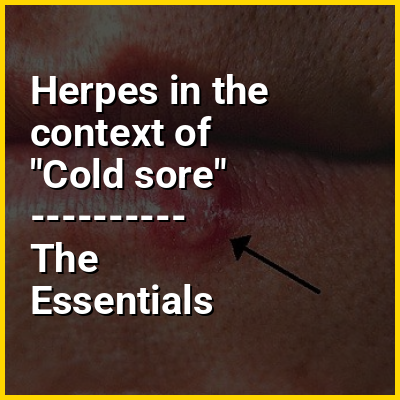
A cold sore is a type of herpes infection caused by the herpes simplex virus that affects primarily the lip. Symptoms typically include a burning pain followed by small blisters or sores. The first attack may also be accompanied by fever, sore throat, and enlarged lymph nodes. The rash usually heals within ten days, but the virus remains dormant in the trigeminal ganglion. The virus may periodically reactivate to create another outbreak of sores in the mouth or lip.

The cause is usually herpes simplex virus type 1 (HSV-1) and occasionally herpes simplex virus type 2 (HSV-2). The infection is typically spread between people by direct non-sexual contact. Attacks can be triggered by sunlight, fever, psychological stress, or a menstrual period. Direct contact with the genitals can result in genital herpes. Diagnosis is usually based on symptoms but can be confirmed with specific testing.

View the full Wikipedia page for Orolabial herpes
↑ Return to Menu

Herpes in the context of Genital herpes

Genital herpes is a herpes infection of the genitals caused by the herpes simplex virus (HSV). Most people either have no or mild symptoms and thus do not know they are infected. When symptoms do occur, they typically include small blisters that break open to form painful ulcers. Flu-like symptoms, such as fever, aching, or swollen lymph nodes, may also occur. Onset is typically around 4 days after exposure with symptoms lasting up to 4 weeks. Once infected further outbreaks may occur but are generally milder.

The disease is typically spread by direct genital contact with the skin surface or secretions of someone who is infected. This may occur during sex, including anal, oral, and manual sex. Sores are not required for transmission to occur. The risk of spread between a couple is about 7.5% over a year. HSV is classified into two types, HSV-1 and HSV-2. While historically HSV-2 was more common, genital HSV-1 has become more common in the developed world. Diagnosis may occur by testing lesions using either PCR or viral culture or blood tests for specific antibodies.

View the full Wikipedia page for Genital herpes
↑ Return to Menu

Herpes in the context of Panticosa

Panticosa (in Aragonese: Pandicosa) is a municipality located in the province of Huesca, Aragon, Spain.

During the late 19th century and early 20th century, it was a successful spa town, famous for its pure mountain waters, that supposedly cured everything from liver diseases to herpes.

View the full Wikipedia page for Panticosa
↑ Return to Menu

Herpes in the context of Duplodnaviria

Duplodnaviria is a realm of viruses that includes all double-stranded DNA viruses that encode the HK97 fold major capsid protein. The HK97 fold major capsid protein (HK97 MCP) is the primary component of the viral capsid, which stores the viral deoxyribonucleic acid (DNA). Viruses in the realm also share a number of other characteristics, such as an icosahedral capsid, an opening in the capsid called a portal, a protease enzyme that empties the inside of the capsid prior to DNA packaging, and a terminase enzyme that packages viral DNA into the capsid. There are three groups of viruses in the realm: caudoviruses, herpesviruses, and the putative group mirusviruses.

Caudoviruses are one of the most abundant group of viruses on Earth and are ubiquitous worldwide. They infect prokaryotes and are a major cause of death in them, which contributes to the recycling of organic material in a process called viral shunt. Caudoviruses have been used as model organisms to study biological processes and as a form of therapy to treat bacterial infections. Herpesviruses infect animals and are commonly associated with diseases such as herpes and chickenpox. Mirusviruses infect microscopic eukaryotes and are among the most common eukaryotic viruses in sunlit oceans. Many duplodnavirians are able to enter a latent state in which they persist in cells without forming virions. This is called the lysogenic cycle and contrasts with the lytic cycle, which produces virions.

View the full Wikipedia page for Duplodnaviria
↑ Return to Menu

Herpes in the context of Impetigo

Impetigo is a contagious bacterial infection that involves the superficial skin. The most common presentation is yellowish crusts on the face, arms, or legs. Less commonly there may be large blisters which affect the groin or armpits. The lesions may be painful or itchy. Fever is uncommon.

It is typically due to either Staphylococcus aureus or Streptococcus pyogenes. Risk factors include attending day care, crowding, poor nutrition, diabetes mellitus, contact sports, and breaks in the skin such as from mosquito bites, eczema, scabies, or herpes. With contact it can spread around or between people. Diagnosis is typically based on the symptoms and appearance.

View the full Wikipedia page for Impetigo
↑ Return to Menu