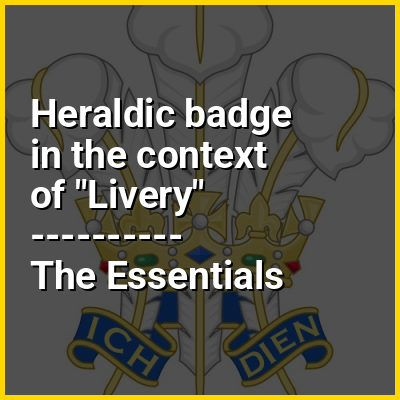
A heraldic badge, emblem, impresa, or device, is a graphic symbol worn or displayed to indicate allegiance to, or the property of, an individual, family or corporate body. Medieval forms may also be called a livery badge, or a cognizance. Such badges are para-heraldic, as they do not necessarily use elements from the coat of arms of the person or family they represent – although many do, often borrowing from the crest or supporters. Their use is more flexible than that of arms proper.
Badges worn on clothing were common in the late Middle Ages, particularly in England. They could be made of base metal, cloth or other materials and worn on the clothing of the followers of the person in question; grander forms would be worn by important persons, with the Dunstable Swan Jewel in enamelled gold a rare survivor. Livery collars were also given to important persons, often with the badge as a pendant. The badge would also be embroidered or appliqued on standards, horse trappings, livery uniforms, and other belongings. Many medieval badges survive in English pub names.