Hair removal in the context of "Arm"

Play Trivia Questions online!

or

Skip to study material about Hair removal in the context of "Arm"

Ad spacer

⭐ Core Definition: Hair removal

Hair removal is the deliberate removal of body hair or head hair. This process is also known as epilation or depilation.

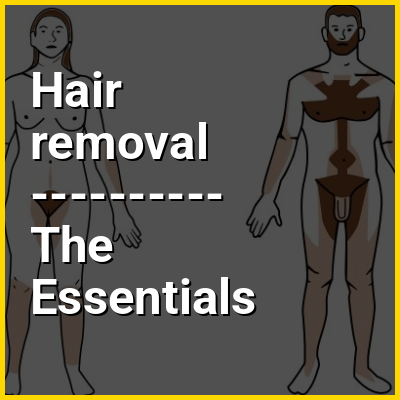
Hair is a common feature of the human body, exhibiting considerable variation in thickness and length across different populations. Hair becomes more visible during and after puberty. Additionally, men typically exhibit thicker and more conspicuous body hair than women.Both males and females have visible body hair on the head, eyebrows, eyelashes, armpits, genital area, arms, and legs. Males and some females may also have thicker hair growth on their face, abdomen, back, buttocks, anus, areola, chest, nostrils, and ears. Hair does not generally grow on the lips, back of the ear, the underside of the hands or feet, or on certain areas of the genitalia.
↓ Menu

>>>PUT SHARE BUTTONS HERE<<<
In this Dossier

Hair removal in the context of Human body

The human body is the entire structure of a human being. It is composed of many different types of cells that together create tissues and subsequently organs and then organ systems.

The external human body consists of a head, hair, neck, torso (which includes the thorax and abdomen), genitals, arms, hands, legs, and feet. The internal human body includes organs, teeth, bones, muscle, tendons, ligaments, blood vessels and blood, lymphatic vessels and lymph.

↑ Return to Menu

Hair removal in the context of Hair

Hair is a protein filament that grows from follicles found in the dermis. Hair is one of the defining characteristics of mammals.The human body, apart from areas of glabrous skin, is covered in follicles which produce thick terminal and fine vellus hair. Most common interest in hair is focused on hair growth, hair types, and hair care, but hair is also an important biomaterial primarily composed of protein, notably alpha-keratin.

Attitudes towards different forms of hair, such as hairstyles and hair removal, vary widely across different cultures and historical periods, but it is often used to indicate a person's personal beliefs or social position, such as their age, gender, or religion.

↑ Return to Menu

Hair removal in the context of Trichotillomania

Trichotillomania (TTM), also known as hair-pulling disorder or compulsive hair pulling, is a mental disorder characterized by a long-term urge that results in the pulling out of one's own hair. A brief positive feeling may occur as hair is removed. Efforts to stop pulling hair typically fail. Hair removal may occur anywhere; however, the head and around the eyes are most common. The hair pulling is to such a degree that it results in distress and can cause visible hair loss.

As of 2023, the specific cause or causes of trichotillomania are unclear. Trichotillomania is probably due to a combination of genetic and environmental factors. The disorder may run in families. It occurs more commonly in those with obsessive compulsive disorder (OCD). Episodes of pulling may be triggered by anxiety. People usually acknowledge that they pull their hair, and broken hairs may be seen on examination. Other conditions that may present similarly include body dysmorphic disorder; however, in that condition people remove hair to try to improve what they see as a problem in how they look.

↑ Return to Menu

Hair removal in the context of Armpit hair

Underarm hair, also known as axillary hair or armpit hair, is human hair in the underarm area (axilla).

In some cultures, underarm hair removal through shaving or other means is common, particularly among women.

↑ Return to Menu