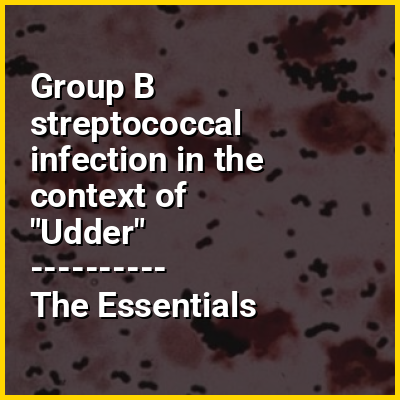
Group B streptococcal infection, also known as Group B streptococcal disease or just Group B strep infection, is the infectious disease caused by the bacterium Streptococcus agalactiae. Streptococcus agalactiae is the most common human pathogen belonging to group B of the Lancefield classification of streptococci—hence the name of group B streptococcal (GBS). Infection with GBS can cause serious illness and sometimes death, especially in newborns, the elderly, and people with compromised immune systems.The most severe form of group B streptococcal disease is neonatal meningitis in infants, which is frequently lethal and can cause permanent neuro-cognitive impairment.
S. agalactiae was recognized as a pathogen in cattle by Edmond Nocard and Mollereau in the late 1880s. It can cause bovine mastitis (inflammation of the udder) in dairy cows. The species name "agalactiae" meaning "no milk", alludes to this. Its significance as a human pathogen was first described in 1938, and in the early 1960s, GBS came to be recognized as a major cause of infections in newborns. In most people, Streptococcus agalactiae is a harmless commensal bacterium that is part of the normal human microbiota colonizing the gastrointestinal and genitourinary tracts. Up to 30% of healthy human adults are asymptomatic carriers of GBS.