Good King Wenceslas in the context of Saint Wenceslaus


Good King Wenceslas in the context of Saint Wenceslaus

⭐ Core Definition: Good King Wenceslas

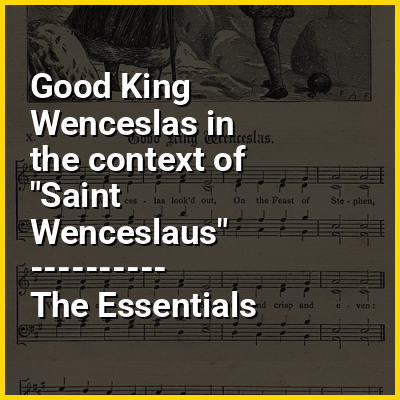
"Good King Wenceslas" (Roud number 24754) is a Christmas carol that tells a story of a tenth-century king of Bohemia (modern day Czech Republic) who goes on a journey, braving harsh winter weather, to give alms to a poor peasant on the Feast of Stephen. During the journey, his page is about to give up the struggle against the cold weather, but is enabled to continue by following the king's footprints, step for step, through the deep snow.

The legend is based on a story about Saint Wenceslaus I, Duke of Bohemia (907–935).
↓ Menu
HINT:

In this Dossier

Good King Wenceslas in the context of Wenceslaus I, Duke of Bohemia

Wenceslaus I (Czech: Václav [ˈvaːtslaf] ; c. 907 – 28 September 935), Wenceslas I or Václav the Good was the Prince (kníže) of Bohemia from 921 until his death, probably in 935. According to the legend, he was assassinated by his younger brother, Boleslaus the Cruel.

His martyrdom and the popularity of several biographies gave rise to a reputation for heroic virtue that resulted in his sainthood. He was posthumously declared to be a king and patron saint of the Czech state. He is the subject of the well-known "Good King Wenceslas", a carol for Saint Stephen's Day.

View the full Wikipedia page for Wenceslaus I, Duke of Bohemia
↑ Return to Menu