Global heating in the context of Carbon dioxide in the atmosphere of Earth


Global heating in the context of Carbon dioxide in the atmosphere of Earth

⭐ Core Definition: Global heating

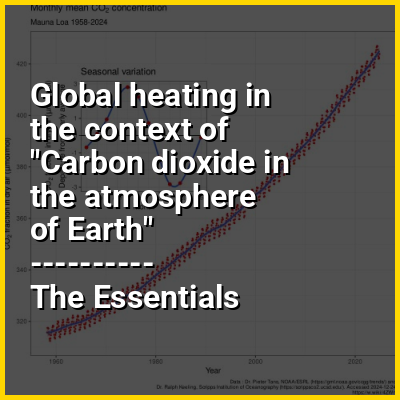
Present-day climate change includes both global warming—the ongoing increase in global average temperature—and its wider effects on Earth's climate system. Climate change in a broader sense also includes previous long-term changes to Earth's climate. The modern-day rise in global temperatures is driven by human activities, especially fossil fuel (coal, oil and natural gas) burning since the Industrial Revolution. Fossil fuel use, deforestation, and some agricultural and industrial practices release greenhouse gases. These gases absorb some of the heat that the Earth radiates after it warms from sunlight, warming the lower atmosphere. Earth's atmosphere now has roughly 50% more carbon dioxide, the main gas driving global warming, than it did at the end of the pre-industrial era, reaching levels not seen for millions of years.

Climate change has an increasingly large impact on the environment. Deserts are expanding, while heat waves and wildfires are becoming more common. Amplified warming in the Arctic has contributed to thawing permafrost, retreat of glaciers and sea ice decline. Higher temperatures are also causing more intense storms, droughts, and other weather extremes. Rapid environmental change in mountains, coral reefs, and the Arctic is forcing many species to relocate or become extinct. Even if efforts to minimize future warming are successful, some effects will continue for centuries. These include ocean heating, ocean acidification and sea level rise.
↓ Menu
HINT:

In this Dossier

Global heating in the context of Methane emissions

Increasing methane emissions are a major contributor to the rising concentration of greenhouse gases in Earth's atmosphere, and are responsible for up to one-third of near-term global heating. During 2019, about 60% (360 million tons) of methane released globally was from human activities, while natural sources contributed about 40% (230 million tons). Reducing methane emissions by capturing and utilizing the gas can produce simultaneous environmental and economic benefits.

Since the Industrial Revolution, concentrations of methane in the atmosphere have more than doubled, and about 20 percent of the warming the planet has experienced can be attributed to the gas. About one-third (33%) of anthropogenic emissions are from gas release during the extraction and delivery of fossil fuels; mostly due to gas venting and gas leaks from both active fossil fuel infrastructure and orphan wells. Russia is the world's top methane emitter from oil and gas. The International Energy Agency (IEA) highlights that abandoned coal mines and oil and gas wells have become significant sources of methane emissions. If considered a country, these emissions would rank as the fourth-largest globally, surpassing those of Iran. The IEA estimates that addressing over 8 million abandoned onshore oil and gas sites would cost about $100 billion.

View the full Wikipedia page for Methane emissions
↑ Return to Menu