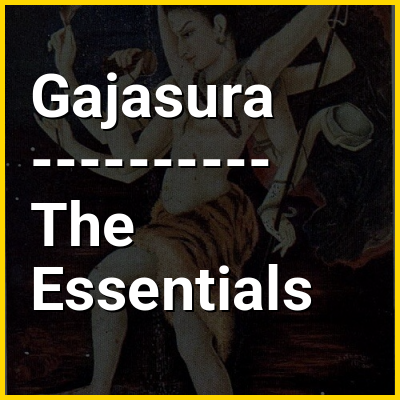
Gajasura in the context of "Asura"

Play Trivia Questions online!

or

Skip to study material about Gajasura in the context of "Asura"

Ad spacer

⭐ Core Definition: Gajasura

In Hindu epics, Gajasura (Sanskrit: गजासुर, lit.'elephant demon') is a generic name given to an asura (demon), who assumes the form of an elephant. It may refer to demons:

↓ Menu

>>>PUT SHARE BUTTONS HERE<<<
In this Dossier

Gajasura in the context of Hindu mythology

Hindu mythology refers to the collection of myths associated with Hinduism, derived from various Hindu texts and traditions. These myths are found in sacred texts such as the Vedas, the Itihasas (the Mahabharata and the Ramayana), and the Puranas. They also appear in regional and ethnolinguistic texts, including the Bengali Mangal Kavya and the Tamil Periya Puranam and Divya Prabandham. Additionally, Hindu myths are also found in widely translated fables like the Panchatantra and the Hitopadesha, as well as in Southeast Asian texts influenced by Hindu traditions.

↑ Return to Menu

Gajasura in the context of Mahishasura

Mahishasura (Sanskrit: महिषासुर, IAST: Mahiṣāsura) is a bovine asura in Hinduism. He is depicted in Hindu literature as a deceitful demon who pursued his evil ways by shape-shifting. Mahishasura was the son of the asura Rambha and the brother of buffalo-demoness named Mahishi. He was ultimately killed by the goddess Durga with her trishula (trident) after which she gained the epithet Mahishasuramardini ("Slayer of Mahishasura"). Mahishasura had a son named Gajasura.

The Navaratri ("Nine Nights") festival eulogises this battle between Mahishasura and Durga, culminating in Vijayadashami, a celebration of his ultimate defeat. This story of the "triumph of good over evil" carries profound symbolism in Hinduism, particularly Shaktism, and is both narrated as well as reenacted from the Devi Mahatmya at many South and Southeast Asian Hindu temples.

↑ Return to Menu