Foureye butterflyfish in the context of Spot-finned butterflyfish


Foureye butterflyfish in the context of Spot-finned butterflyfish

⭐ Core Definition: Foureye butterflyfish

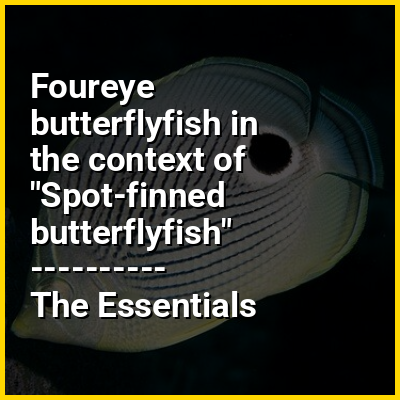
The foureye butterflyfish (Chaetodon capistratus) is a butterflyfish (family Chaetodontidae). It is alternatively called the four-eyed butterflyfish. This species is found in the Western Atlantic from Massachusetts, USA and Bermuda to the West Indies and northern South America.

Chaetodon capistratus is the type species of Chaetodon. If this genus is split up as some have proposed, it will retain its present name like its closest relatives, which include the banded butterflyfish (C. striatus) and the spot-finned butterflyfish (C. ocellatus).
↓ Menu
HINT:

In this Dossier

Foureye butterflyfish in the context of Automimicry

In zoology, automimicry, Browerian mimicry, or intraspecific mimicry, is a form of mimicry in which the same species of animal is imitated. There are two different forms.

In one form, first described by Lincoln Brower in 1967, weakly-defended members of a species with warning coloration are parasitic on more strongly-defended members of their species, mimicking them to provide the negative reinforcement learning required for warning signals to function. The mechanism, analogous to Batesian mimicry, is found in insects such as the monarch butterfly.

View the full Wikipedia page for Automimicry
↑ Return to Menu