Fatimid Caliphate in the context of Al-Azhar Mosque


Fatimid Caliphate in the context of Al-Azhar Mosque

Fatimid Caliphate Study page number 1 of 7

Play TriviaQuestions Online!

or

Skip to study material about Fatimid Caliphate in the context of "Al-Azhar Mosque"


⭐ Core Definition: Fatimid Caliphate

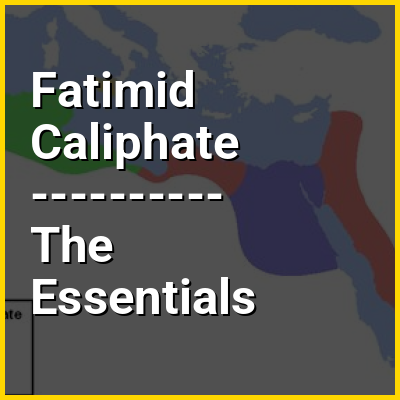
The Fatimid Caliphate (/ˈfætɪmɪd/; Arabic: الخلافة الفاطمیّة, romanizedal-Khilāfa al-Fāṭimiyya), also known as the Fatimid Empire, was a caliphate extant from the tenth to the twelfth centuries CE under the rule of the Fatimids, an Isma'ili Shi'a dynasty. Spanning a large area of North Africa and West Asia, it ranged from the western Mediterranean in the west to the Red Sea in the east. The Fatimids traced their ancestry to the Islamic prophet Muhammad's daughter Fatima and her husband Ali, the first Shi'a imam. The Fatimids were acknowledged as the rightful imams by different Isma'ili communities as well as by denominations in many other Muslim lands and adjacent regions. Originating during the Abbasid Caliphate, the Fatimids initially conquered Ifriqiya (roughly present-day Tunisia and north-eastern Algeria). They extended their rule across the Mediterranean coast and ultimately made Egypt the center of the caliphate. At its height, the caliphate included—in addition to Egypt—varying areas of the Maghreb, Sicily, the Levant, and the Hejaz.

Between 902 and 909, the foundation of the Fatimid state was realized under the leadership of da'i (missionary) Abu Abdallah, whose conquest of Aghlabid Ifriqiya with the help of Kutama forces paved the way for the establishment of the Caliphate. After the conquest, Abdallah al-Mahdi Billah was retrieved from Sijilmasa and then accepted as the Imam of the movement, becoming the first Caliph and founder of the dynasty in 909. In 921, the city of al-Mahdiyya was established as the capital. In 948, they shifted their capital to al-Mansuriyya, near Kairouan. In 969, during the reign of al-Mu'izz, they conquered Egypt, and in 973, the caliphate was moved to the newly founded Fatimid capital of Cairo. Egypt became the political, cultural, and religious centre of the empire and it developed a new and "indigenous Arabic culture". After its initial conquests, the caliphate often allowed a degree of religious tolerance towards non-Shi'a sects of Islam, as well as to Jews and Christians. However, its leaders made little headway in persuading the Egyptian population to adopt its religious beliefs.
↓ Menu
HINT:

In this Dossier

Fatimid Caliphate in the context of Egypt

Egypt, officially the Arab Republic of Egypt, is a country spanning the northeast corner of Africa and southwest corner of Asia via the Sinai Peninsula. It is bordered by the Mediterranean Sea to the north, Palestine and Israel to the northeast, the Red Sea to the east, Sudan to the south, and Libya to the west; the Gulf of Aqaba in the northeast separates Egypt from Jordan and Saudi Arabia. Cairo is the capital, largest city, and leading cultural center, while Alexandria is the second-largest city and an important hub of industry and tourism. With over 107 million inhabitants, Egypt is the third-most populous country in Africa and 15th-most populated in the world.

Egypt has one of the longest histories of any country, tracing its heritage along the Nile Delta back to the 6th–4th millennia BCE. Considered a cradle of civilisation, Ancient Egypt saw some of the earliest developments of writing, agriculture, urbanisation, organised religion and central government. Egypt was an early and important centre of Christianity, later adopting Islam from the seventh century onwards. Alexandria, Egypt's former capital and currently second largest city, was a hub of global knowledge through its Library. Cairo became the capital of the Fatimid Caliphate in the tenth century and of the subsequent Mamluk Sultanate in the 13th century. Egypt then became part of the Ottoman Empire in 1517, until its local ruler Muhammad Ali established modern Egypt as an autonomous Khedivate in 1867. The country was then occupied by the British Empire along with Sudan and gained independence in 1922 as a monarchy.

View the full Wikipedia page for Egypt
↑ Return to Menu

Fatimid Caliphate in the context of Basil II

Basil II Porphyrogenitus (Greek: Βασίλειος Πορφυρογέννητος, romanizedBasíleios Porphyrogénnētos; 958 – 15 December 1025), nicknamed the Bulgar Slayer (Greek: ὁ Βουλγαροκτόνος, ho Boulgaroktónos, Bulgarian: Българоубиец), was the senior Byzantine emperor from 976 to 1025. He and his brother Constantine VIII were crowned before their father Romanos II died in 963, but they were too young to rule. The throne thus went to two generals, Nikephoros Phokas (r.963–969) and John Tzimiskes (r. 969–976) before Basil became senior emperor, though his influential great-uncle Basil Lekapenos remained as the de facto ruler until 985. His reign of 49 years and 11 months was the longest of any Roman emperor.

The early years of Basil's reign were dominated by civil wars against two powerful generals from the Byzantine Anatolian aristocracy: first Bardas Skleros and later Bardas Phokas, which ended shortly after Phokas' death and Skleros' submission in 989. Basil then oversaw the stabilization and expansion of the eastern frontier of the Byzantine Empire and the complete subjugation of the First Bulgarian Empire, its foremost European foe, after a long struggle. Although the Byzantines had made a truce with the Fatimid Caliphate in 987–988, Basil led a campaign against the Caliphate that ended with another truce in 1000. He also conducted a campaign against the Khazar Khaganate that gained the Byzantine Empire part of Crimea and a series of successful campaigns against the Kingdom of Georgia.

View the full Wikipedia page for Basil II
↑ Return to Menu

Fatimid Caliphate in the context of Cairo

Cairo is the capital and largest city of Egypt and the Cairo Governorate, being home to more than 10 million people. It is also part of the largest urban agglomeration in Africa, the Arab world, and the Middle East. The Greater Cairo metropolitan area is one of the largest in the world by population with over 22 million people.

The area that would become Cairo was part of ancient Egypt, as the Giza pyramid complex and the ancient cities of Memphis and Heliopolis are near-by. Located near the Nile Delta, the predecessor settlement was Fustat following the Muslim conquest of Egypt in 641 next to an existing ancient Roman fortress, Babylon. Subsequently, Cairo was founded by the Fatimid dynasty in 969. It later superseded Fustat as the main urban centre during the Ayyubid and Mamluk periods (12th–16th centuries).

View the full Wikipedia page for Cairo
↑ Return to Menu

Fatimid Caliphate in the context of Saudi Arabia

Saudi Arabia, officially the Kingdom of Saudi Arabia (KSA), is a country in West Asia. Located in the center of the Middle East, it covers the bulk of the Arabian Peninsula and has a land area of about 2,150,000 km (830,000 sq mi), making it the fifth-largest country in Asia, the largest in the Middle East, and the twelfth-largest in the world. It is bordered by the Red Sea to the west; Jordan, Iraq, and Kuwait to the north; the Persian Gulf, Bahrain, Qatar and the United Arab Emirates to the east; Oman to the southeast; and Yemen to the south. The Gulf of Aqaba in the northwest separates Saudi Arabia from Egypt and Israel. Saudi Arabia is the only country with a coastline along both the Red Sea and the Persian Gulf, and most of its terrain consists of arid desert, lowland, steppe, and mountains. The capital and largest city is Riyadh; other major cities include Jeddah and the two holiest cities in Islam, Mecca and Medina. With a population of almost 32.2 million, Saudi Arabia is the fourth most populous country in the Arab world.

Pre-Islamic Arabia, the territory that constitutes modern-day Saudi Arabia, was the site of several ancient cultures and civilizations; the prehistory of Saudi Arabia shows some of the earliest traces of human activity outside Africa. Islam emerged in what is now Saudi Arabia in the early seventh century. Islamic prophet Muhammad united the population of the Arabian Peninsula and created a single Islamic religious polity. Following his death in 632, his followers expanded Muslim rule beyond Arabia, conquering territories in North Africa, Central, South Asia and Iberia within decades. Arab dynasties originating from modern-day Saudi Arabia founded the Rashidun (632–661), Umayyad (661–750), Abbasid (750–1517), and Fatimid (909–1171) caliphates, as well as numerous other Muslim states in Asia, Africa, and Europe.

View the full Wikipedia page for Saudi Arabia
↑ Return to Menu

Fatimid Caliphate in the context of Syria (region)

Syria (Arabic: ٱلشَّام, romanizedAsh-Shām or Shām), also known as Greater Syria or Syria-Palestine, is a historical region located east of the Mediterranean Sea in West Asia, broadly synonymous with the Levant. Throughout history, the term Syria-Palestine referred to the area between the Taurus Mountains in the north and Arabia-Sinai in the south, however in modern times the term "Syria" is used to refer solely to the Syrian Arab Republic.

The term is originally derived from Assyria, an ancient Semitic-speaking civilization centered in northern Mesopotamia, modern-day Iraq. During the Hellenistic period, the term Syria was applied to the entire Levant as Coele-Syria. Under Roman rule, the term was used to refer to the province of Syria, later divided into Syria Phoenicia and Coele Syria, and to the province of Syria Palaestina. Under the Byzantines, the provinces of Syria Prima and Syria Secunda emerged out of Coele Syria. After the Muslim conquest of the Levant, the term was superseded by the Arabic equivalent Shām, and under the Rashidun, Umayyad, Abbasid, and Fatimid caliphates, Bilad al-Sham was the name of the metropolitan province encompassing most of the region. In the 19th century, the name Syria was revived in its modern Arabic form to denote the whole of Bilad al-Sham, either as Suriyah or the modern form Suriyya, which eventually replaced the Arabic name of Bilad al-Sham.

View the full Wikipedia page for Syria (region)
↑ Return to Menu

Fatimid Caliphate in the context of Tughril

Abu Talib Muhammad Tughril ibn Mika'il (Persian: ابوطالبْ محمد طغرل بن میکائیل), better known as Tughril (طغرل / طغریل; also spelled Toghril / Tughrul), was a Turkoman chieftain, who founded the Seljuk Empire, ruling from 1037 to 1063.

Tughril united many Turkoman warriors of the Central Asian steppes into a confederacy of tribes and led them in conquest of Khorasan and eastern Persia. He would later establish the Seljuk Sultanate after conquering Persia and taking the Abbasid capital of Baghdad from the Buyids in 1055. Tughril relegated the Abbasid Caliphs to state figureheads and took command of the caliphate's armies in military offensives against the Byzantine Empire and the Fatimids in an effort to expand his empire's borders and unite the Islamic world.

View the full Wikipedia page for Tughril
↑ Return to Menu

Fatimid Caliphate in the context of Idrisid dynasty

The Idrisid dynasty or Idrisids (Arabic: الأدارسة al-Adārisah) were an Arab Muslim dynasty from 788 to 974, ruling most of present-day Morocco and parts of present-day western Algeria. Named after the founder, Idris I, the Idrisids were an Alid dynasty descended from Muhammad through his grandson Hasan. Their reign played an important role in the early Islamization of Morocco and also presided over an increase in Arab immigration and Arabization in major urban centers.

Fleeing the Abbasid Caliphate to the east in the aftermath of the Battle of Fakhkh, Idris I first established himself in 788 at Volubilis in present-day Morocco with the help of local Berber allies. He and his son, Idris II, subsequently founded what became the city of Fez further east. Fez became the capital of an Idrisid state which ruled most of present-day Morocco and part of western Algeria. After Idris II's death, the realm was divided between his rival sons. After a period of conflict, the dynasty's authority resumed and remained relatively stable between 836 and 863. In the late 9th century, however, they faced repeated challenges and local opposition. In the 10th century the region came under the political domination of Zenata tribes who fought proxy battles on behalf of two rival powers in the region, the Fatimid Caliphate and the Umayyad Caliphate of Córdoba. The Idrisids were definitively expelled from Fez in 927, but held onto to a reduced territory in the north of Morocco from their base at Hajar an-Nasr. They were finally defeated and removed from power in 974, and a brief attempt to regain power in 985 also failed.

View the full Wikipedia page for Idrisid dynasty
↑ Return to Menu

Fatimid Caliphate in the context of Arab migration to the Maghreb

The Arab migrations to the Maghreb involved successive waves of migration and settlement by Arab people in the Maghreb region of Africa, encompassing modern-day Algeria, Libya, Morocco and Tunisia. The process took place over several centuries, lasting from the early 7th century to the 17th century. The Arab migrants hailed from the Middle East, particularly the Arabian Peninsula, with later groups arriving from the Levant and Iraq.

The influx of Arabs to the Maghreb began in the 7th century with the Arab conquest of the Maghreb, when Arab armies conquered the region as part of the early Muslim conquests. This initial wave of Arab migration was followed by subsequent periods of migration and settlement, notably during the Umayyad and Abbasid caliphates and later Arab dynasties. However, the most significant wave of Arab migration occurred in the 11th century with the arrival of more Bedouin tribes from the Arabian Peninsula, such as Banu Hilal, Banu Sulaym, and Maqil. The last significant wave of Arab migration to the Maghreb was from Al-Andalus in the 17th century as a result of the Reconquista. These migrants established numerous Arab empires and dynasties in the Maghreb, such as the Aghlabids, Idrisids, Sulaymanids, Salihids, Fatimids, Saadians and 'Alawites.

View the full Wikipedia page for Arab migration to the Maghreb
↑ Return to Menu

Fatimid Caliphate in the context of History of Islam

The history of Islam is believed, by most historians, to have originated with Muhammad's mission in Mecca and Medina at the start of the 7th century CE, although Muslims regard this time as a return to the original faith passed down by the Abrahamic prophets, such as Adam, Noah, Abraham, Moses, David, Solomon, and Jesus, with the submission (Islām) to the will of God. According to the traditional account, the Islamic prophet Muhammad began receiving what Muslims consider to be divine revelations in 610 CE, calling for submission to the one God, preparation for the imminent Last Judgement, and charity for the poor and needy. As Muhammad's message began to attract followers (the ṣaḥāba) he also met with increasing hostility and persecution from Meccan elites. In 622 CE Muhammad migrated to the city of Yathrib (now known as Medina), where he began to unify the tribes of Arabia under Islam, returning to Mecca to take control in 630 and order the destruction of all pagan idols. By the time Muhammad died c. 11 AH (632 CE), almost all the tribes of the Arabian Peninsula had converted to Islam, but disagreement broke out over who would succeed him as leader of the Muslim community during the Rashidun Caliphate.

The early Muslim conquests were responsible for the spread of Islam. By the 8th century CE, the Umayyad Caliphate extended from al-Andalus in the west to the Indus River in the east. Polities such as those ruled by the Umayyad and Abbasid caliphates (in the Middle East and later in Spain and Southern Italy), the Fatimids, Seljuks, Ayyubids, and Mamluks were among the most influential powers in the world. Highly Persianized empires built by the Samanids, Ghaznavids, and Ghurids significantly contributed to technological and administrative developments. The Islamic Golden Age gave rise to many centers of culture and science and produced notable polymaths, astronomers, mathematicians, physicians, and philosophers during the Middle Ages. By the early 13th century, the Delhi Sultanate conquered the northern Indian subcontinent, while Turkic dynasties like the Sultanate of Rum and Artuqids conquered much of Anatolia from the Byzantine Empire throughout the 11th and 12th centuries. In the 13th and 14th centuries, destructive Mongol invasions, along with the loss of population due to the Black Death, greatly weakened the traditional centers of the Muslim world, stretching from Persia to Egypt, but saw the emergence of the Timurid Renaissance and major economic powers such as the Mali Empire in West Africa and the Bengal Sultanate in South Asia. Following the deportation and enslavement of the Muslim Moors from the Emirate of Sicily and elsewhere in southern Italy, the Islamic Iberia was gradually conquered by Christian forces during the Reconquista. Nonetheless, in the early modern period, the gunpowder empires—the Ottomans, Timurids, Mughals, and Safavids—emerged as world powers.

View the full Wikipedia page for History of Islam
↑ Return to Menu

Fatimid Caliphate in the context of Ayyubid dynasty

The Ayyubid dynasty (Arabic: الأيوبيون, romanizedal-Ayyūbīyūn), also known as the Ayyubid Sultanate, was the founding dynasty of the medieval Sultanate of Egypt established by Saladin in 1171, following his abolition of the Fatimid Caliphate of Egypt. A Sunni Muslim of Kurdish origin, Saladin had originally served the Zengid ruler Nur al-Din, leading the latter's army against the Crusaders in Fatimid Egypt, where he was made vizier. Following the death of his Zengid suzerain Nur al-Din in 1174, Saladin was proclaimed as the first Sultan of Egypt by the Abbasid Caliphate, and rapidly expanded the new sultanate beyond Egypt to encompass most of Syria, in addition to Hijaz, Yemen, northern Nubia, Tripolitania and Upper Mesopotamia. Saladin's military campaigns set the general borders and sphere of influence of the sultanate of Egypt for the almost 350 years of its existence. Most of the Crusader states fell to Saladin after his victory at the Battle of Hattin in 1187, but the Crusaders reconquered the Syrian coastlands in the 1190s.

After Saladin's death in 1193, his sons contested control of the sultanate, but Saladin's brother al-Adil ultimately became sultan in 1200. All of the later Ayyubid sultans of Egypt were his descendants. In the 1230s, the emirs of Syria attempted to assert their independence from Egypt and the Ayyubid realm remained divided until Sultan as-Salih Ayyub restored its unity by subduing most of Syria, except Aleppo, by 1247. By then, local Muslim dynasties had driven out the Ayyubids from Yemen, the Hejaz, and parts of Mesopotamia. After his death in 1249, as-Salih Ayyub was succeeded in Egypt by his son al-Mu'azzam Turanshah. However, the latter was soon overthrown by his Mamluk generals who had repelled a Crusader invasion of the Nile Delta. This effectively ended Ayyubid power in Egypt. Attempts by the emirs of Syria, led by an-Nasir Yusuf of Aleppo, to wrest back Egypt failed. In 1260, the Mongols sacked Aleppo and conquered the Ayyubids' remaining territories soon after. The Mamluks, who expelled the Mongols, maintained the Ayyubid principality of Hama until deposing its last ruler in 1341.

View the full Wikipedia page for Ayyubid dynasty
↑ Return to Menu

Fatimid Caliphate in the context of Saladin

Salah ad-Din Yusuf ibn Ayyub (c. 1137 – 4 March 1193), commonly known as Saladin, was a Kurdish commander and political leader. He was the founder of the Ayyubid dynasty and the first sultan of both Egypt and Syria. An important figure of the Third Crusade, he spearheaded the Muslim military effort against the Crusader states in the Levant. At the height of his power, the Ayyubid realm spanned Egypt, Syria, Upper Mesopotamia, the Hejaz, Yemen, and Nubia.

Alongside his uncle Shirkuh, a Kurdish mercenary commander in service of the Zengid dynasty, Saladin was sent to Fatimid Egypt in 1164, on the orders of the Zengid ruler Nur ad-Din. With their original purpose being to help restore Shawar as the vizier to the teenage Fatimid caliph al-Adid, a power struggle ensued between Shirkuh and Shawar after the latter was reinstated. Saladin, meanwhile, climbed the ranks of the Fatimid government by virtue of his military successes against Crusader assaults and his personal closeness to al-Adid. After Shawar was assassinated and Shirkuh died in 1169, al-Adid appointed Saladin as vizier. During his tenure, Saladin, a Sunni Muslim, began to undermine the Fatimid establishment; following al-Adid's death in 1171, he abolished the Cairo-based Isma'ili Shia Muslim Fatimid Caliphate and realigned Egypt with the Baghdad-based Sunni Abbasid Caliphate.

View the full Wikipedia page for Saladin
↑ Return to Menu

Fatimid Caliphate in the context of History of Islam in southern Italy

The history of Islam in Sicily and southern Italy began with Arab colonization in Sicily, at Mazara, which was captured in 827. The subsequent rule of Sicily and Malta started in the 10th century. The Emirate of Sicily lasted from 831 until 1061, and controlled the whole island by 965. Though Sicily was the primary Muslim stronghold in Italy, some temporary footholds, the most substantial of which was the port city of Bari (occupied from 847 until 871), were established on the mainland peninsula, especially in mainland southern Italy, though Arab raids, mainly those of Muhammad I ibn al-Aghlab, reached as far north as Naples, Rome and the northern region of Piedmont. The Arab raids were part of a larger struggle for power in Italy and Europe, with Christian Byzantine, Frankish, Norman and indigenous Italian forces also competing for control. Arabs were sometimes allied with various Christian factions against other factions.

In 965 the Kalbids established the independence of their emirate from the Fatimid Caliphate. In 1061 the Normans took Messina, and by 1072 Palermo and its citadel were captured. In 1091 Noto also fell to the Normans, and the conquest was complete. Malta fell later that year, though the Arab administration was kept in place, marking the final chapter of this period. The conquests of the Normans established Roman Catholicism firmly in the region, where Eastern Christianity had been prominent during the time of Byzantine rule and even remained significant during Islamic period. In 1245, Muslims were deported to the settlement of Lucera, by order of Frederick II, king of Sicily. In 1300, Giovanni Pipino da Barletta, count of Altamura, seized Lucera and exiled its population, bringing an end to the medieval Muslim presence in Italy.

View the full Wikipedia page for History of Islam in southern Italy
↑ Return to Menu

Fatimid Caliphate in the context of Emirate of Sicily

The island of Sicily (Arabic: صِقِلِّيَة, romanizedṢiqilliya) was under Islamic rule from the late ninth to the late eleventh centuries. It became a prosperous and influential commercial power in the Mediterranean, with its capital of Palermo (بَلَرْم, Balarm) serving as a major cultural and political center of the Muslim world.

Sicily was a peripheral part of the Byzantine Empire when Muslim forces from Ifriqiya (roughly present-day Tunisia) began launching raids in 652. During the reign of the Aghlabid dynasty of Ifriqiya, a prolonged series of conflicts from 827 to 902 resulted in the gradual conquest of the entire island, with only the stronghold of Rometta, in the far northeast, holding out until 965. The Fatimid Caliphate replaced Aghlabid rule after 909. From 948 onwards, the island was governed by the Kalbid dynasty, who ruled as autonomous emirs while formally acknowledging Fatimid authority.

View the full Wikipedia page for Emirate of Sicily
↑ Return to Menu

Fatimid Caliphate in the context of Aghlabid

The Aghlabid dynasty (Arabic: الأغالبة) was an Arab dynasty centered in Ifriqiya (roughly present-day Tunisia) from 800 to 909 that conquered parts of Sicily, Southern Italy, and possibly Sardinia, nominally as vassals of the Abbasid Caliphate. The Aghlabids were from the tribe of Banu Tamim and adhered to the Mu'tazilite rationalist doctrine within Hanafi Sunni Islam, which they imposed as the state doctrine of Ifriqiya. They ruled until 909 when they were conquered by the new power of the Fatimids.

View the full Wikipedia page for Aghlabid
↑ Return to Menu

Fatimid Caliphate in the context of Fustat

Fustat (Arabic: الفُسطاط, romanizedal-Fusṭāṭ), also Fostat, was the first capital of Egypt under Muslim rule, though it has been integrated into Cairo. It was built adjacent to what is now known as Old Cairo by the Rashidun Muslim general 'Amr ibn al-'As immediately after the Muslim conquest of Egypt in AD 641, and featured the Mosque of Amr, the first mosque built in Egypt.

The city reached its peak in the 12th century, with a population of approximately 200,000. It was the centre of administrative power in Egypt, until it was ordered burnt in 1168 by its own vizier, Shawar, to keep its wealth out of the hands of the invading Crusaders. The remains of the city were eventually absorbed by nearby Cairo, which had been built to the north of Fustat in 969 when the Fatimids conquered the region and created a new city as a royal enclosure for the Caliph. The area fell into disrepair for hundreds of years and was used as a rubbish dump.

View the full Wikipedia page for Fustat
↑ Return to Menu

Fatimid Caliphate in the context of Pope Urban II

Pope Urban II (Latin: Urbanus II; c. 1035 – 29 July 1099), otherwise known as Odo of Châtillon or Otho de Lagery, was the head of the Catholic Church and ruler of the Papal States from 12 March 1088 to his death. He is best known for convening the Council of Clermont, which ignited the series of Catholic military expeditions known as the Crusades.

Pope Urban was a native of France and a descendant of a noble family from the French commune of Châtillon-sur-Marne. Before his papacy, Urban was the grand prior of Cluny and bishop of Ostia. As pope, he dealt with Antipope Clement III, the infighting of various Christian nations, and the Turkish invasions into Anatolia. In 1095, he started preaching for the start of the First Crusade (1096–1099). He promised forgiveness and pardon for all of the past sins of those who would fight to reclaim the Holy Land from Muslims and free the Eastern churches. This pardon would also apply to those fighting the Muslims in Spain. While the First Crusade resulted in the occupation of Jerusalem and expulsion of the Fatimids, Pope Urban II died before he could receive the news.

View the full Wikipedia page for Pope Urban II
↑ Return to Menu

Fatimid Caliphate in the context of Bilad al-Sham

Bilad al-Sham (Arabic: بِلَاد الشَّام, romanizedBilād al-Shām), often referred to as Islamic Syria or simply Syria in English-language sources, was a province of the Rashidun, Umayyad, Abbasid, and Fatimid caliphates. It roughly corresponded with the Byzantine Diocese of the East, conquered by the Muslims in 634–647. Under the Umayyads (661–750), Bilad al-Sham was the metropolitan province of the Caliphate and different localities throughout the province served as the seats of the Umayyad caliphs and princes.

Bilad al-Sham was first organized into the four ajnad (military districts; singular jund) of Dimashq (Damascus), Hims (Homs), al-Urdunn (Jordan), and Filastin (Palestine), between 637 and 640 by Caliph Umar following the Muslim conquest. The jund of Qinnasrin was created out of the northern part of Hims by caliphs Mu'awiya I (r. 661–680) or Yazid I (r. 680–683). The Jazira (Upper Mesopotamia) was made an independent province from the Mesopotamian part of Qinnasrin by Caliph Abd al-Malik in 692. In 786, the jund of al-Awasim and al-Thughur were established from the northern frontier region of Qinnasrin by Caliph Harun al-Rashid. As centralized Abbasid rule over Bilad al-Sham collapsed in the 10th century, control over the region was divided by several potentates and the ajnad only represented nominal divisions. The Abbasids and the Egypt-based Fatimid Caliphate continued to officially recognize the province and its ajnad until the Crusader invasions of the coastal regions in 1099.

View the full Wikipedia page for Bilad al-Sham
↑ Return to Menu