A fantasy fiction magazine, or fantasy magazine, is a magazine which publishes primarily fantasy fiction. Not generally included in the category are magazines for children with stories about such characters as Santa Claus. Also not included are adult magazines about sexual fantasy. Many fantasy magazines, in addition to fiction, have other features such as art, cartoons, reviews, or letters from readers. Some fantasy magazines also publish science fiction and horror fiction, so there is not always a clear distinction between a fantasy magazine and a science fiction magazine. For example, Fantastic magazine published almost exclusively science fiction for much of its run.
>>>PUT SHARE BUTTONS HERE<<<
In this Dossier
Fantasy fiction magazine in the context of Imagination (magazine)
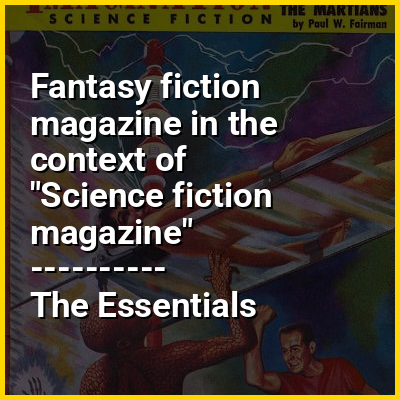
Imagination was an American fantasy and science fiction magazine first published in October 1950 by Raymond Palmer's Clark Publishing Company. The magazine was sold almost immediately to Greenleaf Publishing Company, owned by William Hamling, who published and edited it from the third issue, February 1951, for the rest of the magazine's life. Hamling launched a sister magazine, Imaginative Tales, in 1954; both ceased publication at the end of 1958 in the aftermath of major changes in US magazine distribution due to the liquidation of American News Company.
The magazine was more successful than most of the numerous science fiction titles launched in the late 1940s and early 1950s, lasting a total of 63 issues. Despite this success, the magazine had a reputation for low-quality space opera and adventure fiction, and modern literary historians refer to it in dismissive terms. Hamling consciously adopted an editorial policy oriented toward entertainment, asserting in an early issue that "science fiction was never meant to be an educational tour de force". Few of the stories from Imagination have received recognition, but it did publish Robert Sheckley's first professional sale, "Final Examination", in the May 1952 issue, and also printed fiction by Philip K. Dick, Robert A. Heinlein and John Wyndham.