Extracellular polymeric substance in the context of "Microbial mats"

Play Trivia Questions online!

or

Skip to study material about Extracellular polymeric substance in the context of "Microbial mats"


⭐ Core Definition: Extracellular polymeric substance

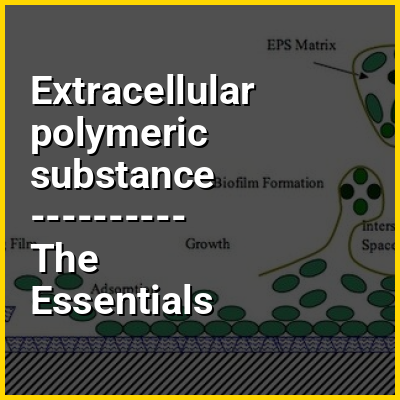
Extracellular polymeric substances (EPS) are natural polymers of high molecular weight secreted by microorganisms into their environment. EPS establish the functional and structural integrity of biofilms, and are considered the fundamental component that determines the physicochemical properties of a biofilm. EPS in the matrix of biofilms provides compositional support and protection of microbial communities from the harsh environments. Components of EPS can be of different classes of polysaccharides, lipids, nucleic acids, proteins, lipopolysaccharides, and minerals.

↓ Menu

In this Dossier

Extracellular polymeric substance in the context of Microbial mat

A microbial mat is a multi-layered sheet or biofilm of microbial colonies, composed of mainly bacteria and/or archaea. Microbial mats grow at interfaces between different types of material, mostly on submerged or moist surfaces, but a few survive in deserts. A few are found as endosymbionts of animals.

Although only a few centimetres thick at most, microbial mats create a wide range of internal chemical environments, and hence generally consist of layers of microorganisms that can feed on or at least tolerate the dominant chemicals at their level and which are usually of closely related species. In moist conditions mats are usually held together by slimy substances secreted by the microorganisms. In many cases some of the bacteria form tangled webs of filaments which make the mat tougher. The best known physical forms are flat mats and stubby pillars called stromatolites, but there are also spherical forms.

↑ Return to Menu

Extracellular polymeric substance in the context of Biofilm

A biofilm is a syntrophic community of microorganisms in which cells stick to each other and often also to a surface. These adherent cells become embedded within a slimy extracellular matrix that is composed of extracellular polymeric substances (EPSs). The cells within the biofilm produce the EPS components, which are typically a polymeric combination of extracellular polysaccharides, proteins, lipids and DNA. Because they have a three-dimensional structure and represent a community lifestyle for microorganisms, they have been metaphorically described as "cities for microbes".

Biofilms may form on living (biotic) or non-living (abiotic) surfaces and can be common in natural, industrial, and hospital settings. They may constitute a microbiome or be a portion of it. The microbial cells growing in a biofilm are physiologically distinct from planktonic cells of the same organism, which, by contrast, are single cells that may float or swim in a liquid medium. Biofilms can form on the teeth of most animals as dental plaque, where they may cause tooth decay and gum disease.

↑ Return to Menu