Epaxial and hypaxial muscles in the context of Transversospinales


Epaxial and hypaxial muscles in the context of Transversospinales

⭐ Core Definition: Epaxial and hypaxial muscles

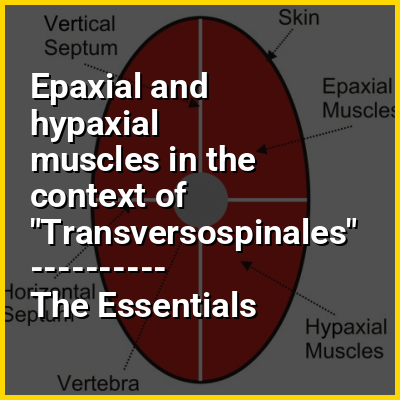
In adult vertebrates, trunk muscles can be broadly divided into hypaxial muscles, which lie ventral to the horizontal septum of the vertebrae and epaxial muscles, which lie dorsal to the septum. Hypaxial muscles include some vertebral muscles, the diaphragm, the abdominal muscles, and all limb muscles. The serratus posterior inferior and serratus posterior superior are innervated by the ventral primary ramus and are hypaxial muscles. Epaxial muscles include other (dorsal) muscles associated with the vertebrae, ribs, and base of the skull. In humans, the erector spinae, the transversospinales (including the multifidus, semispinalis and rotatores), the splenius and suboccipital muscles are the only epaxial muscles.

Hypaxial and epaxial muscles develop directly from somitic cells. Differentiation of hypaxial and epaxial muscles is postulated to have evolved as a new trait in vertebrate animals.
↓ Menu
HINT:

In this Dossier

Epaxial and hypaxial muscles in the context of Myomere

Myomeres are blocks of skeletal muscle tissue arranged in sequence, commonly found in aquatic chordates. Myomeres are separated from adjacent myomeres by fascia consisting of connective tissue, known as myosepta. Myomere counts are sometimes used for identifying specimens using meristics, since their number corresponds to the number of vertebrae in the adults. Myomere location varies, with some species containing these only near the tails, while some have them located near the scapular or pelvic girdles. Depending on the species, myomeres could be arranged in an epaxial or hypaxial manner; hypaxial refers to ventral muscles (those of the "stomach" region) and related structures, while epaxial refers to more dorsal muscles (those of the "back"). The horizontal septum divides these two regions in vertebrates from cyclostomes (jawless lamprey and hagfish) to gnathostomes (jawed fish). In terrestrial chordates, which are gnathostomes themselves, the myomeres become fused as well as indistinct, due to the disappearance of myosepta.

View the full Wikipedia page for Myomere
↑ Return to Menu