Endothelium in the context of "Animal tissue"

Play Trivia Questions online!

or

Skip to study material about Endothelium in the context of "Animal tissue"

Ad spacer

⭐ Core Definition: Endothelium

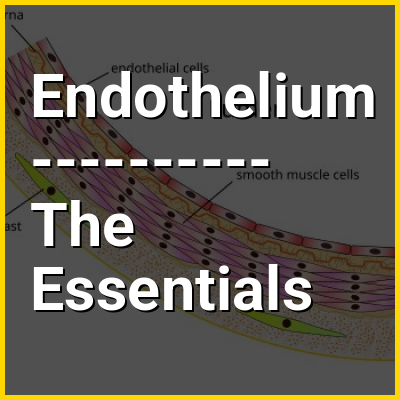
The endothelium (pl.: endothelia) is a single layer of squamous endothelial cells that line the interior surface of blood vessels and lymphatic vessels. The endothelium forms an interface between circulating blood or lymph in the lumen and the rest of the vessel wall.

Endothelial cells in direct contact with blood are called vascular endothelial cells whereas those in direct contact with lymph are known as lymphatic endothelial cells. Vascular endothelial cells line the entire circulatory system, from the heart to the smallest capillaries.

↓ Menu

>>>PUT SHARE BUTTONS HERE<<<
In this Dossier

Endothelium in the context of Tissue (biology)

In biology, tissue is an assembly of similar cells and their extracellular matrix from the same embryonic origin that together carry out a specific function. Tissues occupy a biological organizational level between cells and a complete organ. Accordingly, organs are formed by the functional grouping together of multiple tissues.

The English word "tissue" derives from the French word "tissu", the past participle of the verb tisser, "to weave".

↑ Return to Menu

Endothelium in the context of Lymphatic vessel

The lymphatic vessels (or lymph vessels or lymphatics) are thin-walled vessels (tubes), structured like blood vessels, that carry lymph. As part of the lymphatic system, lymph vessels are complementary to the cardiovascular system. Lymph vessels are lined by endothelial cells, and have a thin layer of smooth muscle, and adventitia that binds the lymph vessels to the surrounding tissue. Lymph vessels are devoted to the propulsion of the lymph from the lymph capillaries, which are mainly concerned with the absorption of interstitial fluid from the tissues. Lymph capillaries are slightly bigger than their counterpart capillaries of the vascular system. Lymph vessels that carry lymph to a lymph node are called afferent lymph vessels, and those that carry it from a lymph node are called efferent lymph vessels, from where the lymph may travel to another lymph node, may be returned to a vein, or may travel to a larger lymph duct. Lymph ducts drain the lymph into one of the subclavian veins and thus return it to general circulation.

The vessels that bring lymph away from the tissues and towards the lymph nodes can be classified as afferent vessels. These afferent vessels then drain into the subcapsular sinus. The efferent vessels that bring lymph from the lymphatic organs to the nodes bringing the lymph to the right lymphatic duct or the thoracic duct, the largest lymph vessel in the body. These vessels drain into the right and left subclavian veins, respectively. There are far more afferent vessels bringing in lymph than efferent vessels taking it out to allow for lymphocytes and macrophages to fulfill their immune support functions. The lymphatic vessels contain valves.

↑ Return to Menu

Endothelium in the context of Platelet

Platelets or thrombocytes (from Ancient Greek θρόμβος (thrómbos) 'clot' and κύτος (kútos) 'cell') are a part of blood whose function (along with the coagulation factors) is to react to bleeding from blood vessel injury by clumping to form a blood clot. Platelets have no cell nucleus; they are fragments of cytoplasm from megakaryocytes which reside in bone marrow or lung tissue, and then enter the circulation. Platelets are found only in mammals, whereas in other vertebrates (e.g. birds, amphibians), thrombocytes circulate as intact mononuclear cells.

One major function of platelets is to contribute to hemostasis: the process of stopping bleeding at the site where the lining of vessels (endothelium) has been interrupted. Platelets gather at the site and, unless the interruption is physically too large, they plug it. First, platelets attach to substances outside the interrupted endothelium: adhesion. Second, they change shape, turn on receptors and secrete chemical messengers: activation. Third, they connect to each other through receptor bridges: aggregation. Formation of this platelet plug (primary hemostasis) is associated with activation of the coagulation cascade, with resultant fibrin deposition and linking (secondary hemostasis). These processes may overlap: the spectrum is from a predominantly platelet plug, or "white clot" to a predominantly fibrin, or "red clot" or the more typical mixture. Berridge adds retraction and platelet inhibition as fourth and fifth steps, while others would add a sixth step, wound repair. Platelets participate in both innate and adaptive intravascular immune responses.
↑ Return to Menu

Endothelium in the context of Coagulation

Coagulation, also known as clotting, is the process by which blood changes from a liquid to a gel, forming a blood clot. It results in hemostasis, the cessation of blood loss from a damaged vessel, followed by repair. The process of coagulation involves activation, adhesion and aggregation of platelets, as well as deposition and maturation of fibrin.

Coagulation begins almost instantly after an injury to the endothelium that lines a blood vessel. Exposure of blood to the subendothelial space initiates two processes: changes in platelets, and the exposure of subendothelial platelet tissue factor to coagulation factor VII, which ultimately leads to cross-linked fibrin formation. Platelets immediately form a plug at the site of injury; this is called primary hemostasis. Secondary hemostasis occurs simultaneously: additional coagulation factors beyond factor VII (listed below) respond in a cascade to form fibrin strands, which strengthen the platelet plug.

↑ Return to Menu

Endothelium in the context of Endocardium

The endocardium (pl.: endocardia) is the innermost layer of tissue that lines the chambers of the heart. Its cells are embryologically and biologically similar to the endothelial cells that line blood vessels. The endocardium also provides protection to the valves and heart chambers.

The endocardium underlies the much more voluminous myocardium, the muscular tissue responsible for the contraction of the heart. The outer layer of the heart is termed epicardium and the heart is surrounded by a small amount of fluid enclosed by a fibrous sac called the pericardium.

↑ Return to Menu