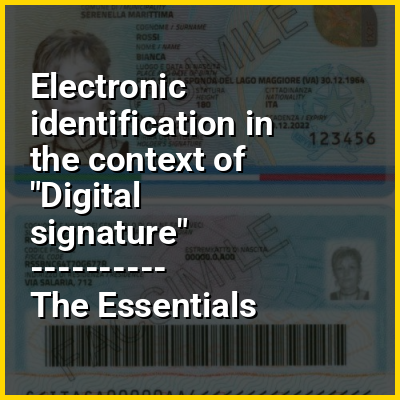
An electronic identification ("eID") is a digital solution for proof of identity of citizens or organizations. They can be used to view to access benefits or services provided by government authorities, banks or other companies, for mobile payments, etc. Apart from online authentication and login, many electronic identity services also give users the option to sign electronic documents with a digital signature.
One form of eID is an electronic identification card (eIC), which is a physical identity card that can be used for online and offline personal identification or authentication. The eIC is a smart card in ID-1 format of a regular bank card, with identity information printed on the surface (such as personal details and a photograph) and in an embedded RFID microchip, similar to that in biometric passports. The chip stores the information printed on the card (such as the holder's name and date of birth) and the holder's photo(s). Several photos may be taken from different angles along with different facial expressions, thus allowing the biometric facial recognition systems to measure and analyze the overall structure, shape and proportions of the face. It may also store the holder's fingerprints. The card may be used for online authentication, such as for age verification or for e-government applications. An electronic signature, provided by a private company, may also be stored on the chip.