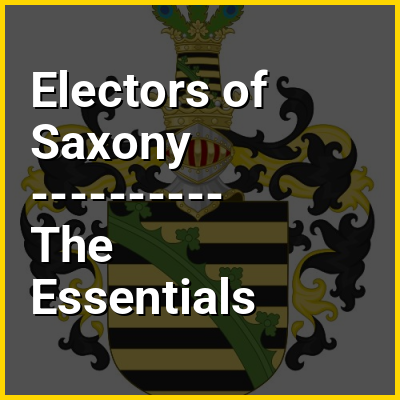
The Electorate of Saxony, also known as Electoral Saxony (German: Kurfürstentum Sachsen or Kursachsen), was a territory of the Holy Roman Empire from 1356 to 1806 initially centred on Wittenberg that came to include areas around the cities of Dresden, Leipzig and Chemnitz. It was a major Holy Roman state, being an electorate and the original protecting power of Protestant principalities until that role was later taken by its neighbor, Brandenburg-Prussia.
In the Golden Bull of 1356, Emperor Charles IV designated the Duchy of Saxe-Wittenberg an electorate, a territory whose ruler was one of the prince-electors who chose the Holy Roman emperor. After the extinction of the male Saxe-Wittenberg line of the House of Ascania in 1422, the duchy and the electorate passed to the House of Wettin. The electoral privilege was tied only to the Electoral Circle, specifically the territory of the former Duchy of Saxe-Wittenberg.