East Angles in the context of "Scandinavian York"

Play Trivia Questions online!

or

Skip to study material about East Angles in the context of "Scandinavian York"

Ad spacer

⭐ Core Definition: East Angles

The Kingdom of the East Angles, informally known as the Kingdom of East Anglia, was a small independent kingdom of the Angles during the Anglo-Saxon period comprising what are now the English counties of Norfolk and Suffolk and perhaps the eastern part of the Fens; the area still known as East Anglia.

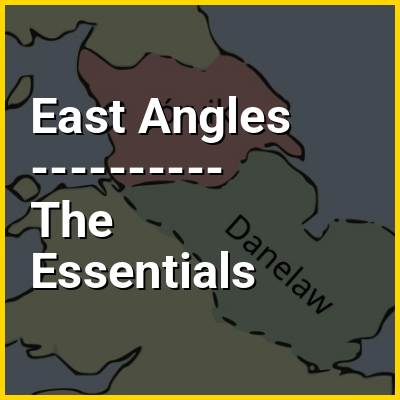
The kingdom formed in the 6th century in the wake of the Anglo-Saxon settlement of Britain and was one of the kingdoms of the Heptarchy. It was ruled by the Wuffingas dynasty in the 7th and 8th centuries, but the territory was taken by Offa of Mercia in 794. Mercian control lapsed briefly following the death of Offa but was reestablished. The Danish Great Heathen Army landed in East Anglia in 865; after taking York it returned to East Anglia, killing King Edmund ("the Martyr") and making it Danish land in 869. After Alfred the Great forced a treaty with the Danes, East Anglia was left as part of the Danelaw.
↓ Menu

>>>PUT SHARE BUTTONS HERE<<<
In this Dossier

East Angles in the context of East Anglia

East Anglia is an area of the East of England, often defined as including the counties of Norfolk, Suffolk and Cambridgeshire, with parts of Essex sometimes also included.

The name derives from the Anglo-Saxon kingdom of the East Angles, a people whose name originated in Anglia (Angeln), in what is now the Schleswig-Holstein state of Northern Germany. East Anglia is a predominantly rural region and contains mainly flat or low-lying and agricultural land. The area is known for considerable natural beauty, sharing a long North Sea coastline, and The Broads (known for marketing purposes as The Broads National Park). Norwich is the largest city in the region.

↑ Return to Menu