Dance notation in the context of "Choreograph"

Play Trivia Questions online!

or

Skip to study material about Dance notation in the context of "Choreograph"


⭐ Core Definition: Dance notation

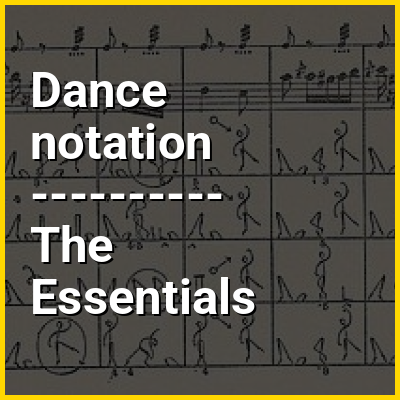
Dance notation is the symbolic representation of human dance movement and form, using methods such as graphic symbols and figures, path mapping, numerical systems, and letter and word notations. Several dance notation systems have been invented, many of which are designed to document specific types of dance while others have been developed with capturing the broader spectrum of human movement potential. A dance score is a recorded dance notation that describes a particular dance.

↓ Menu

In this Dossier

Dance notation in the context of Choreography

Choreography is the art of designing sequences of movements of physical bodies (or their depictions) in which motion or form or both are specified. Choreography may also refer to the design itself. A choreographer creates choreographies through the art of choreography, a process known as choreographing. It most commonly refers to dance choreography.

In dance, choreography may also refer to the design itself, sometimes expressed by means of dance notation. Dance choreography is sometimes called dance composition. Aspects of dance choreography include the compositional use of organic unity, rhythmic or non-rhythmic articulation, theme and variation, and repetition. The choreographic process may employ improvisation to develop innovative movement ideas. Generally, choreography designs dances intended to be performed as concert dance.

↑ Return to Menu

Dance notation in the context of Cachucha

Cachucha is a Spanish solo dance in
4
or
8
time, similar to the bolero. Cachucha is danced to an Andalusian national song with castanet accompaniment.

↑ Return to Menu

Dance notation in the context of Friedrich Albert Zorn

Friedrich Albert Zorn (3 April 1816, Kempten – 1 January 1895, Odesa) was a German dancer, choreographer and dance theorist. He was a member of the Berlin Academy of Dance, the Society of Dance Teachers in Berlin, and the Society of Dance Teachers in Canada.

↑ Return to Menu

Dance notation in the context of Doris Humphrey

Doris Batcheller Humphrey (October 17, 1895 – December 29, 1958) was an American dancer and choreographer of the early twentieth century. Along with her contemporaries Martha Graham and Katherine Dunham, Humphrey was one of the second generation modern dance pioneers who followed their forerunners – including Isadora Duncan, Ruth St. Denis, and Ted Shawn – in exploring the use of breath and developing techniques still taught today. As many of her works were annotated, Humphrey continues to be taught, studied and performed.

↑ Return to Menu

Dance notation in the context of Historical dance

Historical dance (or early dance) is a term covering a wide variety of Western European-based dance types from the past as they are danced in the present. Today historical dances are danced as performance, for pleasure at themed balls or dance clubs, as historical reenactment, or for musicological or historical research.

Dances from the early 20th century can be recreated precisely, being within living memory and after the advent of film and video recording. Earlier dance types, however, must be reconstructed from less reliable evidence such as surviving notations and instruction manuals.

↑ Return to Menu