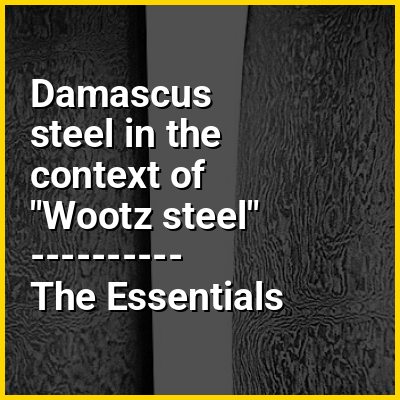
Damascus steel (Arabic: فولاذ دمشقي) is the high-carbon crucible steel of the blades of historical swords forged using the wootz process in the Near East, characterized by distinctive patterns of banding and mottling reminiscent of flowing water, sometimes in a "ladder" or "rose" pattern. Damascus steel was reputed to be tough, resistant to shattering, and capable of being honed to a sharp, resilient edge.
Originally, it came from Southern India and Sri Lanka, where the steel-making techniques used were first developed. The term "Damascus steel" is rooted in the medieval city of Damascus, Syria, perhaps as an early example of branding. However, there is now a general agreement that many of the swords, or at least the steel ingots from which they were forged, were imported from elsewhere.