Czech Baroque architecture in the context of Christoph Dientzenhofer


Czech Baroque architecture in the context of Christoph Dientzenhofer

⭐ Core Definition: Czech Baroque architecture

Czech Baroque architecture refers to the architectural period of the 17th and 18th century in Bohemia, Moravia and Silesia, which comprised the Crown of Bohemia and today constitute the Czech Republic.

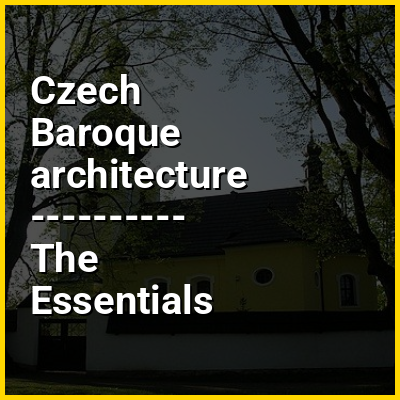
The Baroque style also changed the character of the Czech countryside (churches and chapels in Czech countryside are mostly Baroque). Czech Baroque architecture is considered to be a unique part of the European cultural heritage thanks to its extensiveness and extraordinariness. In the first third of the 18th century the Czech lands (especially Bohemia) were one of the leading artistic centers of the Baroque style. In Bohemia there was completed in a very original way the development of the Radical Baroque style created in Italy by Francesco Borromini and Guarino Guarini. The leading architects of the Czech High Baroque style (also called Radical Baroque of Bohemia) were Christoph Dientzenhofer, Kilian Ignaz Dientzenhofer and Jan Blažej Santini-Aichel.
↓ Menu
HINT:

In this Dossier

Czech Baroque architecture in the context of Prague

Prague (/ˈprɑːɡ/ PRAHG; Czech: Praha [ˈpraɦa] ) is the capital and largest city of the Czech Republic and the historical capital of Bohemia. Prague, located on the Vltava River, has a population of about 1.4 million, while its metropolitan area is home to approximately 2.3 million people.

Prague is a historical city with Romanesque, Gothic, Renaissance, and Baroque architecture. It was the capital of the Kingdom of Bohemia and residence of several Holy Roman Emperors, most notably Charles IV (r. 1346–1378) and Rudolf II (r. 1575–1611). It was an important city to the Habsburg monarchy and Austria-Hungary. The city played major roles in the Bohemian and the Protestant Reformation, the Thirty Years' War, and in 20th-century history as the capital of Czechoslovakia between the World Wars and the post-war Communist era.

View the full Wikipedia page for Prague
↑ Return to Menu

Czech Baroque architecture in the context of Jan Blažej Santini-Aichel

Jan Blažej Santini Aichel (Italian: Giovanni Battista Santini Aichel, German: Johann Blasius Santini Aichel; 3 February 1677 – 7 December 1723) was a Czech architect of Italian descent. His major works are representative of the unique Baroque Gothic style.

View the full Wikipedia page for Jan Blažej Santini-Aichel
↑ Return to Menu

Czech Baroque architecture in the context of Prague, Czech Republic

Prague (/ˈprɑːɡ/ PRAHG; Czech: Praha [ˈpraɦa] ) is the capital and largest city of the Czech Republic and the historical capital of Bohemia. Prague, located on the Vltava River, has a population of about 1.4 million, while its metropolitan area is home to approximately 2.3 million people.

Prague is a historical city with Romanesque, Gothic, Renaissance, and Baroque architecture. It was the capital of the Kingdom of Bohemia and residence of several Holy Roman Emperors, most notably Charles IV (r. 1346–1378) and Rudolf II (r. 1575–1611). It was an important city to the Habsburg monarchy and Austria-Hungary. The city played major roles in the Bohemian and Protestant Reformations, the Thirty Years' War, and in 20th-century history as the capital of Czechoslovakia between the World Wars and the post-war Communist era.

View the full Wikipedia page for Prague, Czech Republic
↑ Return to Menu