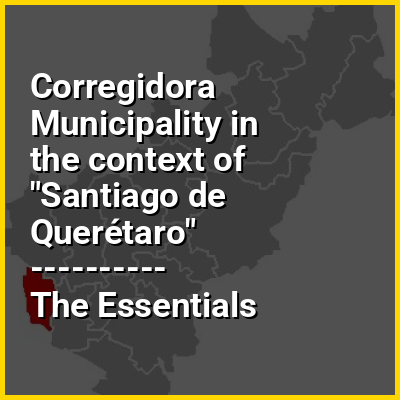
Querétaro is a state in central Mexico, divided into 18 municipalities. According to the 2020 INEGI census, it is the twenty-first most populated state out of thirty-two with 2,368,467 inhabitants and the sixth smallest by land area spanning 11,690.6 square kilometres (4,513.8 sq mi). The largest municipality by population is Querétaro, with 1,049,777 residents (44.32% of the state's total), while the smallest is San Joaquín with 8,359 residents. The largest municipality by land area is Cadereyta de Montes, with an area of 1,347.40 km (520.23 sq mi), and the smallest is Corregidora with 234.90 km (90.70 sq mi). The newest municipalities are Ezequiel Montes, Pedro Escobedo and San Joaquín, established in 1941.
Municipalities in Querétaro are administratively autonomous of the state government according to the 115th article of the 1917 Constitution of Mexico. Every three years, citizens elect a municipal president (Spanish: presidente municipal) by a plurality voting system who heads a concurrently elected municipal council (ayuntamiento) responsible for providing all the public services for their constituents. The municipal council consists of a variable number of trustees and councillors (regidores y síndicos). Municipalities are responsible for public services (such as water and sewerage), street lighting, public safety, traffic, and the maintenance of public parks, gardens and cemeteries. They may also assist the state and federal governments in education, emergency fire and medical services, environmental protection and maintenance of monuments and historical landmarks. Since 1984, they have had the power to collect property taxes and user fees, although more funds are obtained from the state and federal governments than from their own income.
View the full Wikipedia page for Municipalities of Querétaro