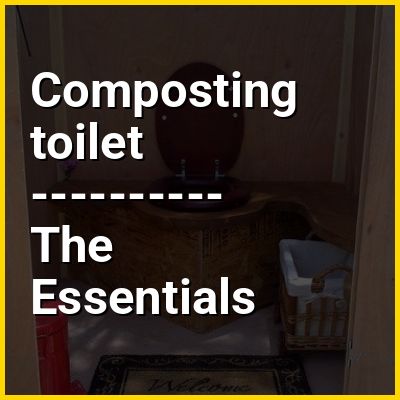
A composting toilet is a type of dry toilet that treats human waste by a biological process called composting. This process leads to the decomposition of organic matter and turns human waste into compost-like material. Composting is carried out by microorganisms (mainly bacteria and fungi) under controlled aerobic conditions. Most composting toilets use no water for flushing and are therefore called "dry toilets".
In many composting toilet designs, a carbon additive such as sawdust, coconut coir, or peat moss is added after each use. This practice creates air pockets in the human waste to promote aerobic decomposition. This also improves the carbon-to-nitrogen ratio and reduces potential odor. Most composting toilet systems rely on mesophilic composting. Longer retention time in the composting chamber also facilitates pathogen die-off. The end product can also be moved to a secondary system – usually another composting step – to allow more time for mesophilic composting to further reduce pathogens.